
The Midnight Overthinker: Why Anxiety and Sleeplessness Go Hand in Hand
For millions of people, the approach of bedtime does not signal peace or relaxation; instead, it marks the beginning of an exhausting psychological battle. The moment the head hits the pillow and the bedroom goes dark, the modern world falls away, leaving an individuals alone with their thoughts. For those prone to high stress levels, this silence is instantly filled by a racing mind, persistent worries, and a flood of midnight overthinking. Everyday concerns about work, finances, or family are suddenly magnified in the quiet hours of the night. This frustrating state of hyperarousal turns the bedroom into a psychological battlefield, where the harder one fights to switch off, the more elusive rest becomes, leaving them trapped in a exhausting cycle of exhaustion.
This frustrating experience demonstrates a fundamental biological truth: anxiety and sleeplessness are deeply intertwined, feeding into one another in a disruptive feedback loop. When a person experiences heightened anxiety, their body treats the psychological stress as an immediate physical threat, activating the survival instincts of the sympathetic nervous system. Instead of transitioning into the calm, restorative states required for sleep, the brain is flooded with stress hormones like cortisol and adrenaline, keeping the heart rate elevated and the mind on high alert. This physiological state of panic makes natural rest nearly impossible, ensuring that daytime worries transform directly into long, restless nights.
To truly understand why some individuals are highly vulnerable to this nocturnal distress while others can switch off effortlessly, we must look beyond basic lifestyle habits. Emerging research in the field of sleep genetics reveals that our internal response to emotional stress and our ability to down-regulate the nervous system at night are heavily influenced by our molecular makeup. Our DNA establishes the baseline sensitivity of our neurological pathways, determining how easily a stressful day can trigger an overnight state of alertness. By looking at these inherent biological traits, science helps us understand that midnight overthinking is not a personal failure, but rather a direct result of how a person’s underlying biology handles psychological pressure when the lights go out.
The Neurological Crossroads: How Anxiety Disrupts Your Sleep Architecture
To understand why a mind filled with worry leads to a fragmented night, one must examine what happens within the brain’s internal sleep architecture. Sleep is not a uniform state of unconsciousness; rather, it is a beautifully orchestrated sequence of distinct cycles, shifting precisely between light sleep, deep slow-wave sleep, and Rapid Eye Movement (REM) phases. Experiencing chronic anxiety acts as a profound neurological disruption to this natural rhythm.
The underlying philosophy of modern neuro-architecture tracking lies in replacing standard sleep-duration counting with strategic biomolecular foresight. Analysing how chronic stress-induced neurological pathways interact with specific internal circadian variables allows medical teams to eliminate historical trial-and-error clinical treatments. Mapping these specific sleep architecture patterns transforms abstract neurological tracking into an unshakeable, personalised blueprint for sustained emotional recovery and long-term health maintenance.
Wired by Design: The Genetic Blueprint Linking Anxiety to Insomnia
While external pressures like demanding workloads or personal challenges are obvious triggers for sleeplessness, they only tell half the story. The reason why one person can sail through a highly stressful day and fall asleep effortlessly, while another is left tossing and turning for hours, is deeply rooted in our biological programming. This divergence highlights a fundamental truth: our brains are wired by design. The overarching genetic blueprint we inherit dictates the baseline sensitivity of our central nervous system, effectively determining our natural threshold for vulnerability to anxiety and its notorious consequence, insomnia.
Our DNA acts as the master manual for constructing the intricate neural pathways that process emotional stimuli and stress responses. Within this biological framework, specific genetic variations influence how efficiently our brain cells communicate and regulate our moods. If your genetic makeup predisposes you to a highly sensitive amygdala—the brain’s emotional smoke detector—ordinary daily stressors are interpreted as major threats. This inherited hyper-reactivity ensures that when night falls, the biological switches required to quieten the mind fail to engage properly, paving the way for chronic, stress-induced sleep disturbances.
Furthermore, modern genomic research has shown that this genetic vulnerability is highly polygenic, meaning it involves a complex network of multiple genes working together. These genetic traits govern everything from how we synthesize stress hormones to how quickly our bodies can clear them from our bloodstream. For an individual whose DNA is tuned to a high-alert setting, even minor daytime worries can trigger a prolonged release of cortisol that lasts well into the night. By understanding this internal blueprint, we can see that the exhausting combination of anxiety and insomnia is not a sign of personal weakness, but a tangible reflection of a biological system designed to stay awake.
The Calm and the Storm: GABRA2, SLC6A4, and the Neurotransmitters of Dread
At the microscopic level, the nightly battle between relaxation and alertness is governed by chemicals known as neurotransmitters. For individuals suffering from chronic anxiety, this delicate chemical balance is often severely compromised due to specific variations in key genes, such as GABRA2 and SLC6A4, which trigger the unnecessary release of stress hormones right when the body needs to rest.
 Deep biomolecular genotyping reveals the hidden genetic variations that cause the central nervous system to accelerate when trying to switch off.


Analysing the biomolecular traits behind neurotransmitter resilience reveals that nighttime restlessness is highly predictable. By replacing outdated trial-and-error psychological interventions with advanced molecular screening frameworks, medical teams can accurately categorise individual GABRA2 and SLC6A4 thresholds, ensuring maximum sleep quality and personalised neurological safety long before chronic sleep architecture degradation occurs.
Adenosine Metabolism and the Caffeine Trap: Why Anxious Brains Are Highly Sensitive
For many individuals, a morning cup of coffee is a harmless, comforting ritual that provides a welcome boost of alertness. However, for those who struggle with baseline anxiety, that single espresso can trigger a catastrophic chain reaction that wreaks havoc on their night. These highly sensitive individuals often find that even a small amount of caffeine consumed early in the day leads to intense nighttime heart palpitations, a racing pulse, and severe insomnia. This extreme sensitivity is rarely just a psychological overreaction; rather, it is a direct consequence of a biochemical bottleneck governed by the ADA gene, which regulates how the body metabolizes adenosine.
Adenosine is a vital neurochemical that acts as the body’s natural sleep barometer. Throughout the day, as cells consume energy, adenosine gradually accumulates in the brain, binding to specific receptors to build up “sleep pressure”—the deep, biological urge to rest. The ADA gene provides the definitive instructions for producing the adenosine deaminase enzyme, which is responsible for breaking down and recycling this molecule. When an individual possesses specific variations within the ADA gene, their adenosine clearance rate is significantly altered, changing how their central nervous system interacts with external stimulants.
Caffeine achieves its stimulating effects by acting as an imposter, binding to adenosine receptors and blocking the brain from recognizing its natural sleep signals. In a biochemically resilient individual, caffeine is cleared efficiently, allowing adenosine to reclaim its place by bedtime. However, in an individual with a vulnerable ADA gene variant, the delicate balance of adenosine metabolism is easily disrupted. When caffeine blocks these receptors in a brain already prone to anxiety, it doesn’t just prevent drowsiness—it hyper-activates the central nervous system, driving up the production of stress hormones. This creates a dangerous biochemical trap where a routine morning coffee echoes into the midnight hours, leaving an anxious mind completely unable to find peace.
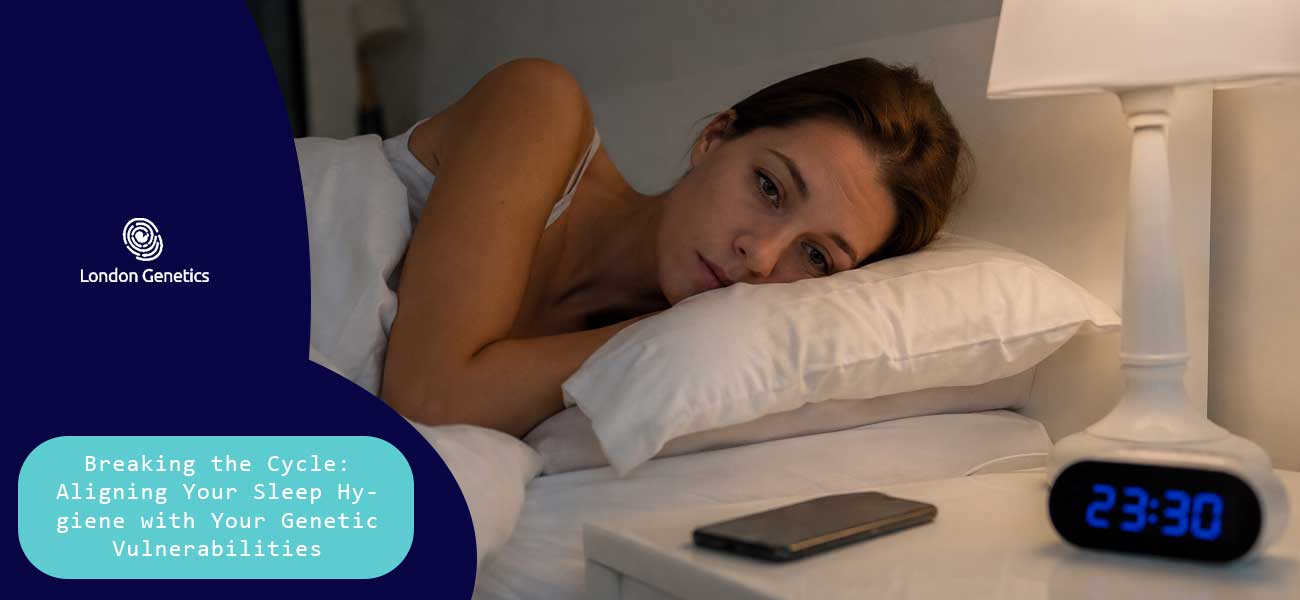
Breaking the Cycle: Aligning Your Sleep Hygiene with Your Genetic Vulnerabilities
Living with a genetic predisposition to anxiety does not mean you are fundamentally doomed to a lifetime of broken sleep. While your DNA sets your baseline sensitivity to stress, it is your environment and daily habits that ultimately determine whether those genetic risks are triggered or contained. Traditional, generic sleep advice—such as “just clear your mind before bed”—often fails miserably for individuals whose neurochemistry is naturally wired for hyper-alertness. To achieve real results, your nightly routine must be deliberately restructured to counteract your specific biological vulnerabilities, turning standard lifestyle habits into highly targeted, gene-intelligent interventions.
For individuals with sensitive neurotransmitter pathways or altered adenosine metabolism, classical lifestyle modifications must be heavily customized. This means shifting away from a casual approach to bedtime and moving toward a highly structured, scientifically sound routine. By introducing precise behavioral changes, you can actively calm a genetically overactive central nervous system. These tailored modifications work by systematically reducing the environmental triggers that cause your body to interpret the evening hours as a time for alertness, effectively creating a biological buffer zone that coaxes your brain out of a state of worry and into a state of deep, restorative rest.
Environmental Shifts to Lower Nocturnal Cortisol
For the genetically anxious sleeper, the primary objective of evening sleep hygiene is to forcefully lower the body’s production of nocturnal cortisol—the primary stress hormone that keeps the mind racing when the lights go out.
-
Implementing Strict Light-Elimination Protocols: Artificial blue light from smartphones, tablets, and overhead bulbs acts as a direct chemical trigger for cortisol production. Genetically sensitive individuals should implement a strict digital blackout at least ninety minutes before bed, utilizing amber-tinted glasses or low-lux, warm lighting to signal the brain’s internal clock that it is safe to wind down.
-
Strategic Timing of Neuro-Calming Supplements: Rather than taking random sleep aids right at bedtime, individuals with GABRA2 or SLC6A4 variants should time their nutritional support meticulously. Introducing specific, high-quality supplements like magnesium glycinate or L-theanine roughly one hour before bed can help support the brain’s struggling GABA pathways, gently applying the internal brakes before the mind begins to spiral.
-
The Cognitive Offloading Ritual: Because a sensitive amygdala is prone to midnight overthinking, you must physically empty your thoughts before your head hits the pillow. Spending ten minutes writing down a concrete “brain dump” or a structured to-do list for the next day removes the psychological burden from your working memory, significantly lowering stress levels and preventing the onset of nocturnal panic.
Precision Rest: How DNA Testing Helps You Reclaim Peace of Mind
When you are trapped in an exhausting cycle of nighttime worry, standard, generic advice like “drink chamomile tea” or “try a warm bath” can feel incredibly frustrating. For individuals whose sleeplessness is fundamentally driven by their underlying biology, these surface-level remedies fail because they completely ignore the root cause of the issue. A one-size-fits-all approach to sleep hygiene simply cannot fix a genetically altered adenosine metabolism, a sensitive amygdala, or a naturally compromised neurotransmitter pathway.
Relying on traditional reactive containment means leaving your cognitive recovery and internal sleep architecture completely to chance. Advanced genetic mapping represents the next great leap in personal wellness management, allowing individuals and medical teams to transition from frustrating, trial-and-error guesswork to an absolute proactive shield tailored directly to your unique physiological makeup.
Book Your Consultation with Dr Karimiani