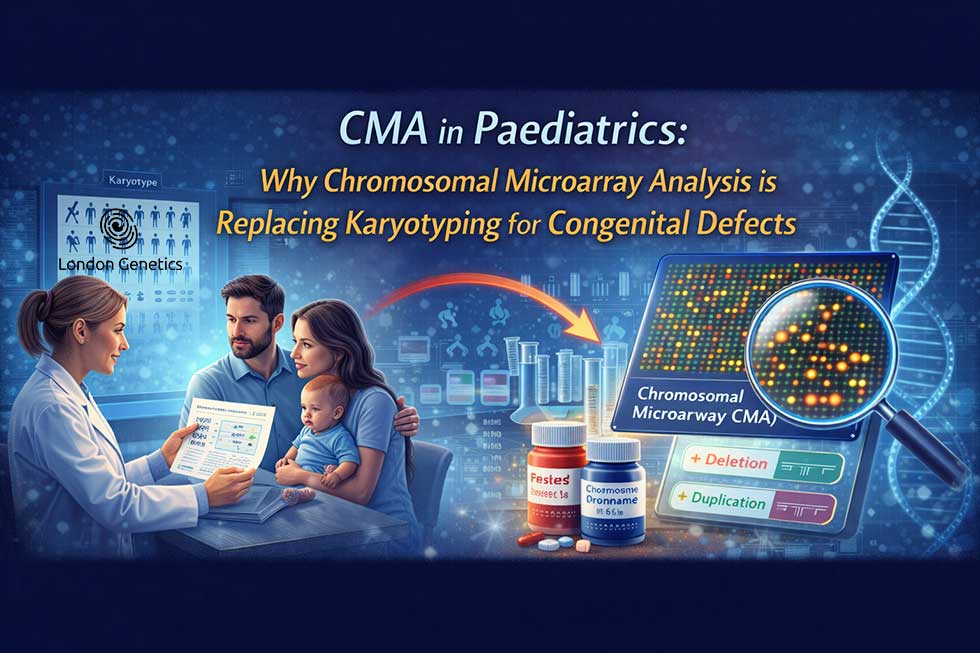
Introduction: The Evolution of Genetic Diagnosis
For many parents navigating the complexities of a child’s developmental or structural health concerns, a “normal” karyotype result can be both a relief and a source of profound frustration. You may find yourself asking: “If the chromosomes look normal under the microscope, why is my child still facing these challenges?”
The answer lies in the limitations of traditional technology. While karyotyping has been the stalwart of clinical genetics for decades, it is akin to looking at a map of a city from a satellite—you can see if a whole neighbourhood is missing, but you cannot see if a single house has been removed. This is where the clinical landscape has shifted.
The introduction of CMA in Paediatrics (Chromosomal Microarray Analysis) has initiated a genuine revolution in how we approach Congenital Abnormalities Genetic Testing. By offering a resolution thousands of times higher than traditional methods, CMA allows us to zoom in on the genetic “street level,” identifying tiny deletions or duplications—known as micro-arrangements—that were previously invisible.
At London Genetics, we recognise that a precise diagnosis is the cornerstone of Genomic Medicine in Paediatrics. Transitioning from basic chromosomal viewing to the advanced precision of CMA in Paediatrics means moving away from clinical uncertainty and towards a bespoke, informed care plan for your child’s future.
Understanding Karyotyping: The Traditional View
To appreciate the precision of modern genomic diagnostics,
it is essential to first understand the traditional gold standard: karyotyping.
Introduced into clinical practice in the mid-20th century,
this technique laid the foundation for chromosome-level analysis
and remains a familiar reference point in genetic medicine.
Karyotyping involves culturing a child’s cells—most commonly from a blood sample—
and arresting them during cell division.
The chromosomes are then stained and examined under a light microscope,
producing a visual map known as a karyogram.
This method is highly effective at identifying large-scale chromosomal abnormalities,
such as an extra copy of chromosome 21 (Down syndrome)
or major structural rearrangements like translocations.
For decades, this made karyotyping the cornerstone
of paediatric and prenatal genetic diagnosis.
Karyotyping relies on visual inspection using light microscopy,
limiting its resolution to changes larger than approximately
5–10 megabases (Mb) of DNA.
Smaller micro-deletions or micro-duplications fall below this threshold,
meaning significant genetic changes may remain invisible
despite a “normal” karyotype result.
Key Takeaway:
While karyotyping is invaluable for detecting large chromosomal abnormalities,
it has a critical blind spot at the sub-microscopic level.
Many complex congenital conditions are driven by genetic changes
smaller than its detection limit.
Understanding this limitation explains why modern, higher-resolution genomic tools
are often required to uncover the true genetic cause
when traditional results appear normal.
What is CMA in Paediatrics? (The Modern Standard)
As we transition from the analogue era of microscopy to the digital age of genomics, CMA in Paediatrics has emerged as the definitive first-line diagnostic tool. Unlike the visual inspection used in karyotyping, Chromosomal Microarray Analysis (CMA) utilises a high-density “DNA chip” technology to scan the entire genome with incredible granularity.
The mechanism is sophisticated yet elegant: thousands of short segments of DNA, known as “probes,” are fixed onto a solid surface. When a child’s DNA is applied to this chip, it competes with a reference sample to bind to these probes. By measuring the intensity of the signals, clinicians can identify gains (duplications) or losses (deletions) of genetic material across all 23 pairs of chromosomes simultaneously.
Why is it called a “Digital Karyotype”?
In clinical circles, CMA in Paediatrics is frequently referred to as a “Digital Karyotype.” This moniker is well-deserved for two primary reasons:
-
Superior Resolution: While a traditional karyotype looks for “missing chapters” in the genetic book, CMA looks for “missing sentences” or even “missing words.” It provides a level of detail that is roughly 100 times more sensitive than a standard microscope-based test.
-
Objective Data: Instead of relying on a technician’s subjective visual interpretation of stained bands, CMA produces quantitative, digital data. This allows for the precise mapping of coordinates on a chromosome, identifying exactly which genes are affected.
This digital precision is particularly vital when we move beyond basic screening. For instance, while we use What Is the NIPT Test? for early screening, CMA provides the diagnostic depth required to confirm complex findings. It is often the next logical step after Exploring Genetic Mutations to pinpoint the exact cause of a structural or developmental anomaly.
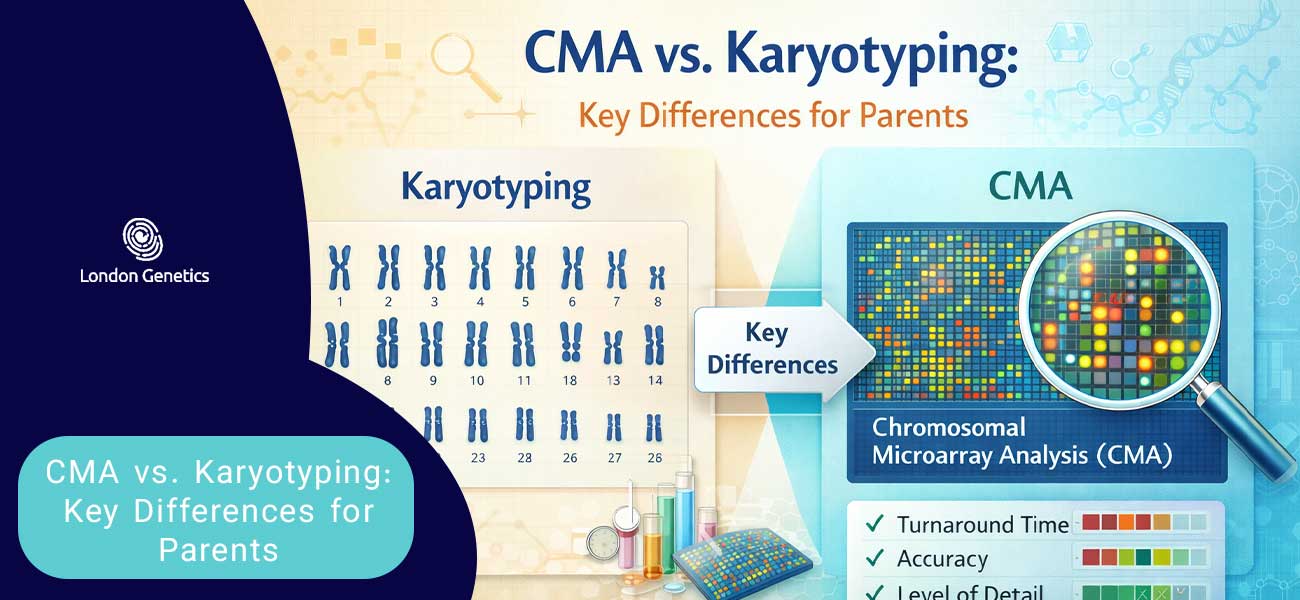
CMA vs. Karyotyping: Key Differences for Parents
When faced with a choice between diagnostic paths, most parents in the UK naturally want to understand the practical implications of each test. While both procedures involve analysing your child’s DNA, the “depth” of the insight they provide differs significantly.
To help you navigate these options at London Genetics, we have summarised the primary distinctions between the traditional approach and the modern digital standard.
Comparison Table: At a Glance
| Feature | Karyotyping (Traditional) | CMA in Paediatrics (Modern Standard) |
| Resolution (Detail) | Low (Only detects changes > 5-10 Mb) | Very High (Detects changes as small as 10-50 kb) |
| Primary Strength | Identifying large-scale trisomies and balanced translocations. | Identifying micro-deletions & micro-duplications (The “hidden” causes). |
| Turnaround Time | Typically 2–3 weeks (Requires cell culture). | Often Faster (10–14 days; no cell culture required). |
| Sensitivity | Detects roughly 5% of unexplained developmental delays. | Detects 15–20% of previously unexplained cases. |
| Detection Method | Visual inspection under a microscope. | Digital genomic scanning using DNA probes. |
Understanding the Nuances
It is important for families to note that while CMA in Paediatrics is vastly superior at finding “hidden” missing or extra pieces of genetic code, it cannot detect “balanced translocations”—where genetic material is swapped between chromosomes but nothing is gained or lost.
In contrast, CMA is the undisputed “gold standard” for identifying the sub-microscopic errors that lead to Congenital Abnormalities. By choosing CMA, you are effectively providing your clinician with a high-definition roadmap of your child’s genome, ensuring that no “micro-detail” is overlooked in the quest for a definitive answer.
Why CMA is Essential for Congenital Structural Defects
Congenital structural defects often raise the question not just of “what” went wrong,
but “why” it occurred.
Many anomalies—such as heart defects, cleft lip/palate, or renal malformations—reflect
underlying genetic imbalances that traditional tests cannot detect.

Hover over each box to explore how CMA identifies hidden genetic causes of structural defects.

CMA (Chromosomal Microarray Analysis) identifies tiny missing or extra DNA segments
that traditional karyotyping misses.
These micro-deletions or micro-duplications can explain the genetic cause
of congenital heart defects, cleft lip/palate, or kidney anomalies.

CMA provides a detailed view of the genomic architecture,
helping clinicians anticipate developmental or medical needs.
For example, detecting a 22q11.2 deletion (DiGeorge syndrome) in heart defects
allows proactive monitoring for learning difficulties or immune issues.

By revealing hidden genetic causes, CMA transforms a simple structural diagnosis
into a comprehensive management plan.
This enables multidisciplinary teams to tailor interventions,
monitor associated risks, and provide the most precise and personalised care for each child.
Key Takeaway:
CMA uncovers sub-microscopic genetic variations that drive congenital structural defects.
This insight allows clinicians to move beyond reactive treatment,
anticipate future health needs, and deliver proactive, personalised care,
giving every child the best possible developmental outcome.
The Clinical Benefits: Beyond the Diagnosis
For many families, the journey through CMA in Paediatrics is about more than just finding a label for a set of symptoms; it is about gaining a roadmap for the future. The clinical utility of this technology extends far beyond a simple “positive” or “negative” result, providing actionable insights that influence both immediate medical care and long-term family planning.
Genomic Urgency in the NICU
In the high-stakes environment of the Neonatal Intensive Care Unit (NICU), time is a critical factor. When a newborn presents with complex structural anomalies or unexplained seizures, a swift genetic diagnosis can be life-altering. By utilising CMA in Paediatrics, consultants can bypass the “diagnostic odyssey” and implement precision-based management almost immediately.
This rapid insight often leads to:
-
Optimised Care Pathways: Avoiding invasive or redundant procedures by understanding the underlying biological cause.
-
Targeted Interventions: Early identification allows for specific surgical or medical strategies tailored to the infant’s unique genetic profile.
-
Reduced Length of Stay: Faster answers mean quicker stabilisation and a clearer path toward bringing the baby home.
Empowering Future Family Planning
Perhaps the most profound benefit for parents is the clarity provided regarding Recurrence Risk. After the birth of a child with a congenital defect, the question of “will this happen again?” is inevitably at the forefront of a couple’s mind.
CMA allows our specialists at London Genetics to determine the origin of a genetic variation. By testing the parents alongside the child (often referred to as “Trio testing”), we can identify whether a mutation is de novo (a new occurrence not inherited) or carried by one of the parents. This distinction is vital; it transforms a vague worry into a statistically grounded understanding, allowing families to make informed, confident decisions about future pregnancies and reproductive options.
Summary of Clinical Benefits
| Key Benefit | Practical Impact for Families |
| Acute NICU Management | Enables rapid, targeted treatment decisions for critically ill newborns. |
| Prognostic Clarity | Provides an evidence-based outlook on the child’s future developmental needs. |
| Recurrence Risk Assessment | Offers precise data on the likelihood of the condition recurring in future siblings. |
| Streamlined Specialist Care | Directs the family toward the most appropriate multidisciplinary support teams. |
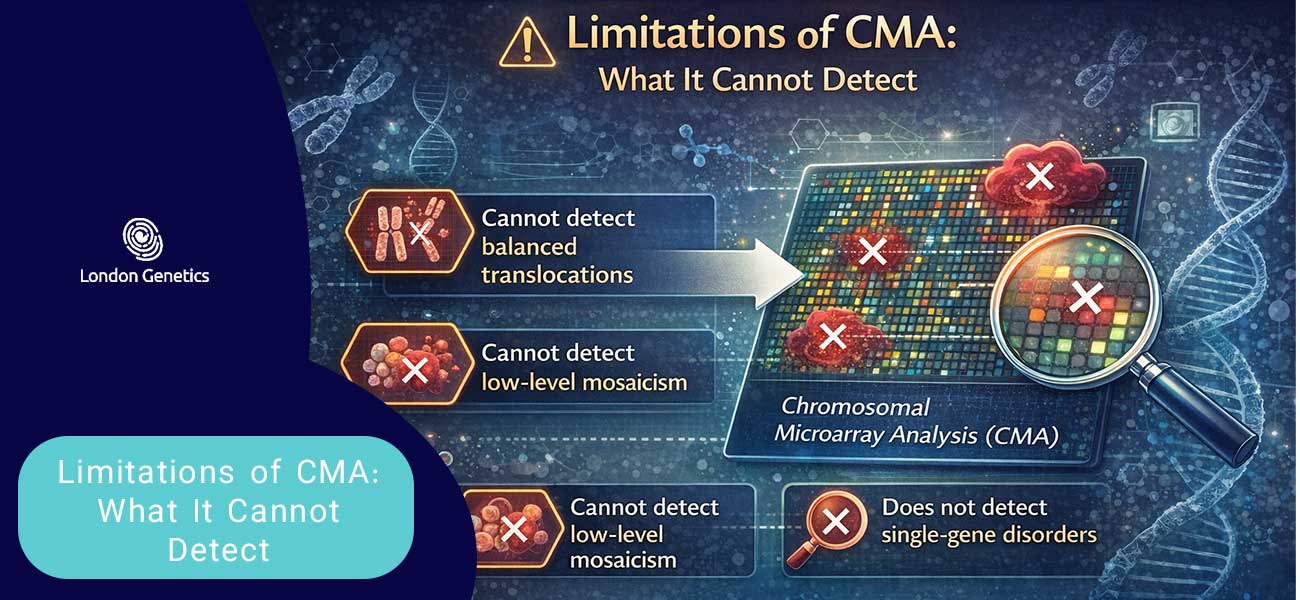
Limitations of CMA: What It Cannot Detect
While CMA in Paediatrics is undeniably a powerful diagnostic tool, it is important for families to understand its technical boundaries. In clinical genetics, no single test can capture the entirety of the human genome’s complexity. For a comprehensive care plan at London Genetics, we ensure that parents are aware of the specific “blind spots” where CMA may not provide the final answer.
Balanced Chromosomal Rearrangements
The most significant limitation of CMA is its inability to detect balanced translocations or inversions. Because CMA works by counting the “quantity” of DNA (detecting gains or losses), it cannot see when genetic material has simply swapped places without any DNA being added or missing. While a person with a balanced translocation is often healthy, this information is crucial for understanding reproductive risks, and in these specific cases, a traditional Karyotype remains the superior investigative tool.
Single Gene Mutations
CMA scans the genome for large and small “blocks” of DNA, but it does not have the resolution to read individual genes letter-by-letter. Therefore, it cannot detect point mutations—tiny single-letter changes in the DNA code that cause conditions like Cystic Fibrosis or Sickle Cell Anaemia. If a clinician suspects a specific single-gene disorder, they may recommend Whole Exome Sequencing (WES) or targeted gene panels instead of, or in addition to, a microarray.
Low-Level Mosaicism and Polyploidy
CMA may also struggle to detect “mosaicism” if it is only present in a small percentage of the child’s cells. Furthermore, it cannot identify triploidy (where a child has three complete sets of chromosomes instead of two) in certain laboratory setups, as the ratio of DNA remains “balanced” even though the total amount is abnormal.
By understanding these limitations, our multidisciplinary team can accurately determine when CMA in Paediatrics is the right starting point and when further, more granular sequencing is required to solve the diagnostic puzzle.
Conclusion: Choosing the Right Path for Your Child
Understanding a child’s health challenges can feel overwhelming.
Chromosomal Microarray Analysis (CMA) in Paediatrics represents a major advancement,
moving beyond the limits of traditional karyotyping to provide precise, actionable insights.
These results unlock the ability to deliver personalised therapy, proactive management,
and a clearer vision for your child’s future.
With expert support, you can:
- Obtain a definitive diagnosis that explains congenital structural defects
- Use genetic insights to guide proactive medical and developmental care
- Gain peace of mind and clarity for future family planning
From Uncertainty to Informed Decisions:
– Understand the genetic drivers behind congenital anomalies.
– Transform diagnostic results into personalised care strategies.
– Navigate your child’s medical journey with confidence and precision.
Why CMA Expertise Matters:
Every child’s genetic makeup is unique, and CMA allows clinicians to detect
micro-deletions, duplications, and other subtle genomic changes
that traditional tests may miss. With this insight, proactive and personalised care
becomes possible, improving long-term health outcomes.
Your Next Step:
Don’t let uncertainty delay optimal care. Partner with London Genetics
to interpret CMA results and develop a bespoke plan tailored to your child’s needs.
Our specialist paediatric genetic team provides guidance every step of the way.