Introduction: Understanding Consanguineous Marriage and Family Planning
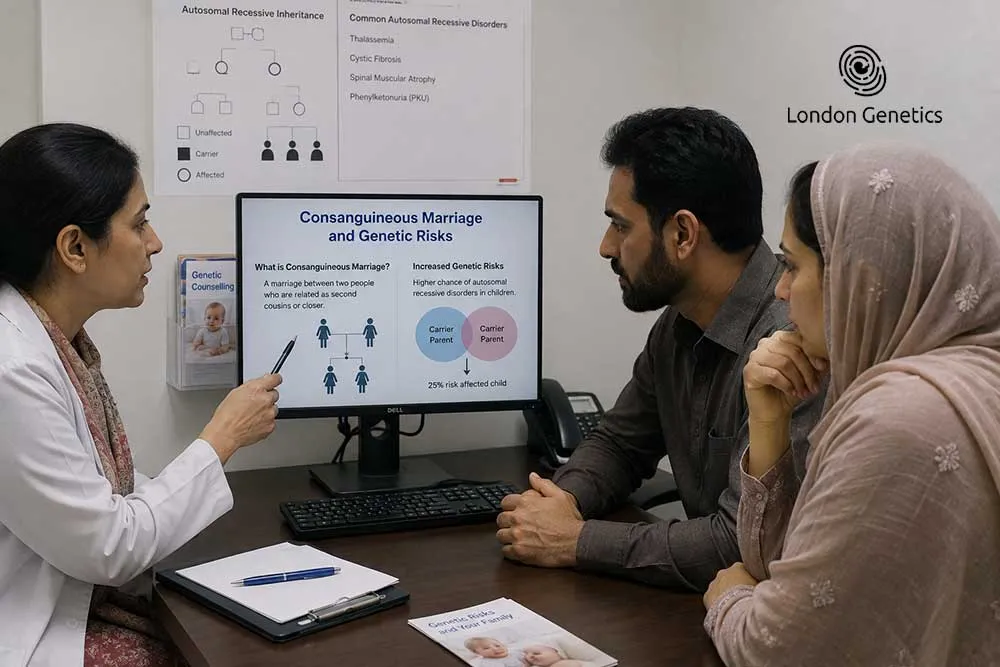
Consanguineous marriage, defined as a union between two individuals who are related by blood (most commonly first or second cousins), is a deeply rooted tradition embraced by many cultures worldwide. For generations, these marriages have been valued for strengthening family bonds, preserving cultural heritage, and ensuring social compatibility. Today, millions of couples globally and within diverse communities in the UK choose this path to build their families.
While modern medicine fully respects the cultural and emotional significance of these unions, advances in healthcare have provided a clearer understanding of how shared ancestry affects family planning. From a biological perspective, a consanguineous marriage increases the likelihood of specific genetic traits being passed down through generations.
Recognising these factors does not mean discouraging beautiful cultural traditions; rather, it is about empowering couples with modern medical insights. By combining cultural respect with proactive healthcare, couples can now access advanced global tools like carrier screening. This simple, non-invasive process allows couples planning a family to look closely at their genetic blueprint, giving them the clarity and confidence needed to safeguard the health of their future children.
The Genetics Behind Consanguinity: What Happens at a Cellular Level?
To fully understand how family planning is affected by shared ancestry, it helps to look at what happens inside our cells. Every human body is built from a massive blueprint of genetic codes, inherited equally from our biological mother and father. Inside these codes, we all carry a mix of healthy genes and altered versions, known as genetic variants, which influence the cellular phenotype and physical presentation of an organism’s development.
Recognising the molecular mechanics of shared ancestry allows clinical teams to eliminate guesswork and categorise subtle risks with absolute clarity. By analysing how recessive traits behave at a cellular level, couples can utilize proactive carrier screening to transform unknown generational blind spots into clear, manageable medical facts for future family planning.
What Are the Actual Genetic Risks Involved?
When discussing family planning within a consanguineous marriage, it is essential to look at the actual clinical data rather than relying on outdated myths or generalized fears. Modern medical science does not aim to alarm couples; instead, it provides clear, objective facts so that families can make informed decisions. The primary focus of genetic medicine in this context is addressing the increased probability of specific inherited health conditions.
Increased Probability of Autosomal Recessive Disorders
As explained at the cellular level, the biological risk in a consanguineous marriage is not caused by “bad genes,” but rather by the higher statistical chance of two identical, hidden variants meeting in a child.
In the general population, the baseline risk of a child being born with a serious congenital or genetic condition is around 2% to 3%. For first-cousin couples, this statistical risk increases by an additional 2% to 3%, bringing the total probability to approximately 5% to 6%. While this means the vast majority of children born to related parents are completely healthy, the doubled statistical probability is why clinical geneticists strongly recommend proactive screening.
Common Conditions Associated with Consanguinity
The genetic conditions that carry a higher risk of being passed down through blood relatives usually fall under the category of autosomal recessive disorders. Some of the most common and clinically relevant conditions include:
-
Thalassaemia: A group of inherited blood disorders that affect the body’s ability to produce haemoglobin, leading to severe anaemia. It is highly prevalent in specific communities across the Mediterranean, Middle East, and South Asia.
-
Cystic Fibrosis: A genetic condition that causes thick, sticky mucus to build up in the organs, primarily affecting the lungs and digestive system.
-
Spinal Muscular Atrophy (SMA): A neuromuscular disorder that causes progressive muscle weakness and loss of movement due to the wasting of motor neurones.
-
Inherited Metabolic Disorders: A broad group of rare genetic conditions where the body cannot properly turn food into energy (such as PKU or storage diseases), often requiring specialized medical management from birth.
By understanding exactly which conditions are relevant to your family background, carrier screening takes the ambiguity out of family planning. Instead of worrying about vague probabilities, couples receive exact, actionable data regarding these specific disorders, ensuring a clear path forward.
Beyond the Myths: Facts and Misconceptions About Cousin Marriage
When couples consider family planning within a consanguineous marriage, they often encounter a wave of outdated misinformation, societal stigmas, and unnecessary anxiety. Separating historical myths from modern genetic facts is essential to relieve the psychological pressure on families. By looking at the objective reality of cousin marriage, we can replace vague fears with constructive medical knowledge.

Objective genetic analysis demonstrates that shared ancestry merely shifts statistical probabilities rather than designing entirely new clinical disorders.


Key Takeaway:
Analysing the empirical facts behind consanguinity reveals that knowledge is the ultimate protective shield. By replacing outdated societal stigmas with advanced screening frameworks, couples can accurately map their genetic risks and utilise highly effective medical pathways to safeguard their family’s health with absolute confidence.
Empowering Couples: How Carrier Screening Acts as a Protective Shield
Modern reproductive medicine has fundamentally transformed family planning, shifting it from a journey of unpredictable chance into an empowered, informed experience. For couples who share a close ancestral line, modern genetic knowledge functions as the ultimate protective shield. Instead of worrying about abstract statistical percentages, vague family rumors, or outdated societal stigmas, undergoing professional screening provides families with exact, clear, and actionable medical facts long before a child is even conceived. For individuals navigating a consanguineous marriage, this scientific clarity replaces fear with an organized, proactive approach to building a healthy home.
What Does a Carrier Test Look For?
A carrier test is a highly sophisticated, state-of-the-art laboratory process that requires a completely non-invasive and straightforward sample collection, usually utilizing just a simple blood draw or a gentle saliva swab.
The primary scientific objective of this test is to look deeply into your DNA to identify hidden genetic variants associated with hundreds of serious inherited conditions. It is important to emphasize that this test does not look for active diseases in you; because as a healthy carrier, you do not exhibit any symptoms and lead a completely normal life. Instead, the laboratory scans the genetic material of both partners simultaneously to see if you both happen to carry an identical alteration in the exact same gene. For couples in a consanguineous marriage, this comprehensive analysis is vital, as it meticulously cross-references both genetic profiles to ensure that overlapping family traits are fully mapped and understood.
The Power of Pre-Conception Clarity
The true clinical value of this genetic exploration lies entirely in its timing. Choosing to undergo screening before establishing a pregnancy gives couples the invaluable gift of time, control, and a comprehensive medical roadmap.
When you obtain these vital insights prior to conception, you completely eliminate the emotional anxiety and psychological stress of the unknown. For many couples within a consanguineous marriage, discovering that they do not share the same genetic variants brings immediate, profound peace of mind, allowing them to proceed with their pregnancy journey with joy. Conversely, if a shared variant is discovered, it is never a reason to panic. Instead, having this definitive clarity early means you can work closely with a clinical specialist to explore advanced reproductive strategies, customize your prenatal care, and protect your future children before the pregnancy even begins. Ultimately, acknowledging the biological realities of a consanguineous marriage through early testing ensures that your cultural traditions and your family’s medical health walk forward hand in hand.

Reproductive Options If Both Partners Share the Same Variant
Discovering that both you and your partner carry the exact same genetic variant is never a reason to abandon your dreams of building a family. In the past, matching hidden traits within a consanguineous marriage meant facing heartbreaking uncertainty during pregnancy. Today, however, modern reproductive medicine has advanced to a point where being a carrier couple does not dictate the health of your future children. Under the expert guidance of clinical geneticists like Dr Ehsan Karimiani, couples who have entered into a consanguineous marriage are provided with highly reliable, medically proven pathways to completely break the chain of inherited disorders and ensure the birth of a perfectly healthy child.
Pre-Implantation Genetic Testing (PGT) and IVF
One of the most revolutionary breakthroughs in modern reproductive healthcare is Pre-Implantation Genetic Testing (PGT), a sophisticated technique performed in conjunction with In Vitro Fertilisation (IVF). This pathway is particularly transformative for couples in a consanguineous marriage who have discovered a shared autosomal recessive variant through carrier screening.
During this precise medical process, embryos are carefully created in an accredited laboratory using the couple’s eggs and sperm. Before any embryo is selected and transferred to the womb, a highly advanced, safe microscopic biopsy is performed to analyze its exact genetic blueprint. Dr Karimiani and his specialist laboratory team examine whether each embryo has inherited two copies of the healthy gene, one copy (making it a healthy carrier), or both altered copies from the parents.
Only the completely healthy or carrier embryos that are entirely unaffected by the disease are chosen for implantation. For a family building their future within a consanguineous marriage, this advanced intervention provides an unparalleled level of safety, effectively eliminating the risk of passing on specific genetic conditions to the next generation before a pregnancy even begins.
Early Prenatal Diagnosis
For couples who prefer to conceive naturally without undergoing IVF treatments, modern obstetric genetics offers highly precise, proactive monitoring options during the very early stages of gestation. These diagnostic tools are designed to provide absolute clarity to couples in a consanguineous marriage who want to closely monitor their pregnancy:
-
Chorionic Villus Sampling (CVS): Typically performed by a specialist between the 11th and 14th weeks of pregnancy, this test involves taking a tiny sample of cells from the placenta. It allows clinicians to map the baby’s genetic status with incredible accuracy during the first trimester.
-
Amniocentesis: Usually conducted safely from the 15th week onwards, this routine procedure tests a small sample of amniotic fluid surrounding the developing baby to provide a definitive, comprehensive genetic profile.
These early diagnostic techniques ensure that families receive clear, scientifically backed answers early in their journey. Armed with this definitive data, couples can work hand-in-hand with their clinical geneticist to make informed, proactive decisions, preparing tailored healthcare plans from the very moment of birth. Having a shared genetic variant is no longer an insurmountable barrier; it is simply a manageable medical factor that modern science knows exactly how to navigate.
Conclusion: Transforming Early Screening into a Lifelong Healthcare Blueprint
The fundamental journey of safeguarding your child’s health does not conclude when the midwife packs away the collection card on day five. While the standard newborn heel prick test provides a vital, foundational line of defence during the first weeks of life, it represents only the opening chapter of what is now possible in modern preventive medicine. Embracing the full spectrum of advanced genomics allows families to lift the strict boundaries of conventional public health and transform a simple, routine blood spot check into a proactive, lifelong roadmap for personalised clinical care.
Relying solely on basic biochemical parameters means leaving precious, actionable health insights completely on the table. Our specialist team is dedicated to helping parents transition from reactive symptom management to absolute scientific foresight, replacing conventional public safety nets with a clear, confident, and life-changing blueprint tailored entirely to your baby’s true biological reality.
Advanced Genomic Layering:
Utilising high-precision Next-Generation Sequencing (NGS) swab panels to layer the initial biochemical insights of the day 5 heel prick test with deep-dive molecular analysis.
Biochemical Marker Expansion:
Mapping your baby’s unique DNA configuration early to identify specific metabolic pathways, latent medication sensitivities, and hidden genetic predispositions long before they impact development.
Bespoke Proactive Architecture:
Translating complex, raw digital sequencing files into an actionable, future-proof care manual that protects your child from infancy all the way through to adulthood.
Eliminating Clinical Blind Spots:
Bypassing generic public health assumptions by isolating active genetic risk factors, allowing medical teams to anticipate potential health variations and intervene with absolute precision.
Definitive Health Infrastructure:
Escaping traditional screening limitations and transforming a fleeting neonatal blood spot check into an unshakeable, lifelong blueprint for your child’s health and vitality.