Introduction: The Mosaic of Human Genetics
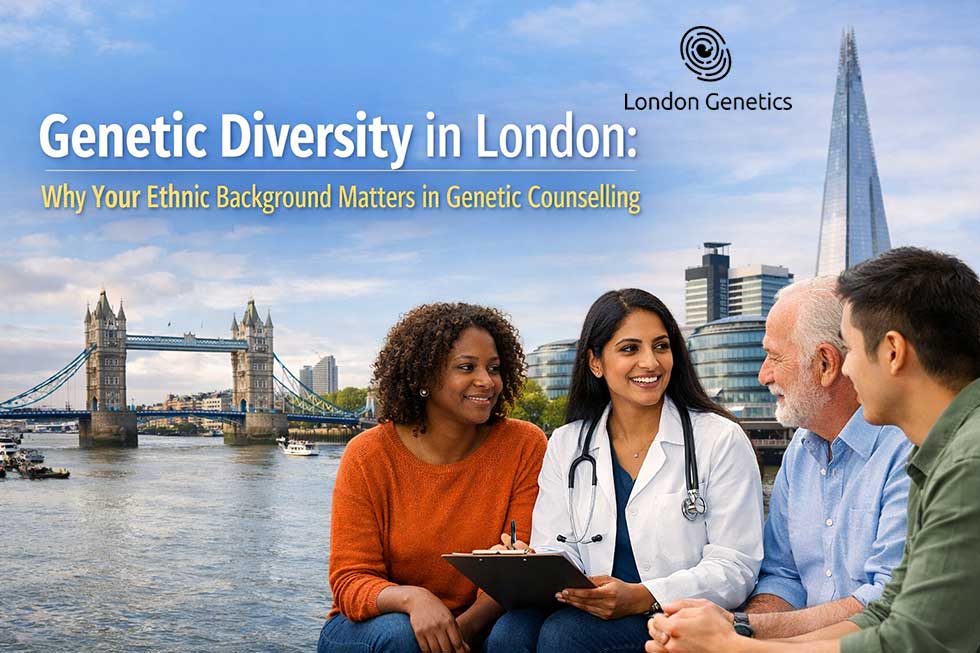
London is often celebrated as a global crossroads, a vibrant city where cultures, languages, and histories intertwine. However, beneath this cultural tapestry lies an even more profound reality: an extraordinary level of Genetic Diversity. This biological variety is what makes our community so unique, but it also means that healthcare, especially when it involves our DNA, cannot be a “one-size-fits-all” endeavour.
At London Genetics, we recognise that your ethnic heritage provides a vital context for your health. Genetic Diversity refers to the subtle variations in our DNA that have developed over generations across different populations. In a cosmopolitan hub like London, understanding these variations is paramount. Whether you are seeking clarity on family health risks or planning for the future, our specialist Genetic Counselling services are designed to honour your individual background, providing expert insights that are as diverse and nuanced as the city we call home.
What Is Genetic Diversity — and Why Does It Matter?
To truly understand modern, precision-based medicine, we must first appreciate the concept of Genetic Diversity.
While humans share approximately 99.9% of their DNA, the remaining 0.1% accounts for the remarkable differences
that shape how we look, how we adapt, and—critically—how our bodies respond to health risks and medical care.
Genetic Diversity is the product of thousands of years of human history—migration, environment,
diet, climate, and survival pressures shaping subtle variations within our DNA.
These differences influence everything from eye colour and metabolism
to immune response and disease susceptibility, making every individual biologically unique.
In a clinical setting, Genetic Diversity plays a decisive role in health outcomes.
Certain populations carry genetic variants that may increase—or reduce—the likelihood
of specific conditions compared to others.
Importantly, this diversity is not a weakness.
It is a biological strength that has allowed humanity to adapt and survive across generations.
The challenge lies not in the diversity itself, but in understanding it correctly.
Because human genetics is inherently complex, accurate interpretation requires a highly specialised approach.
At our London-based clinic, genetic data is never viewed in isolation.
Instead, your results are interpreted through the lens of your unique ancestry,
allowing clinicians to distinguish between harmless natural variation
and genetic markers that may benefit from proactive health management.
Key Takeaway:
Genetic Diversity is not a risk—it is a roadmap.
When interpreted with precision and contextual expertise,
it allows clinicians to separate normal human variation from genuine health concerns.
By understanding your genetics in the context of your ancestry,
personalised medicine becomes not only safer, but significantly more accurate and effective.
The Link Between Ethnicity and Inherited Risks
The distribution of genetic conditions across the globe is far from uniform. Human history—marked by migrations, geographic isolation, and cultural traditions—has shaped the DNA of different populations in unique ways. When we speak of Genetic Diversity, we are acknowledging that certain genetic variants are more concentrated in specific ethnic groups due to these historical patterns.
Understanding Population-Specific Risks
In clinical genetics, it is well-understood that your ancestral “home” on the map can influence your genetic health today. This is not about being “prone to illness,” but rather about understanding the specific markers that have been passed down through generations. For a clinician in a multicultural hub like London, this knowledge is the first line of defence in preventative care.
Common Inherited Conditions by Ancestry
To illustrate how Genetic Diversity impacts clinical risks, consider the following table which highlights conditions that often require targeted screening based on ethnic background:
| Ethnic Background | Common Inherited Conditions | Recommended Screening / Focus |
| Middle Eastern & South Asian | Thalassemia & G6PD Deficiency | Pre-marital & Carrier Screening |
| African & Caribbean | Sickle Cell Anaemia | Haemoglobinopathy evaluation |
| Ashkenazi Jewish | Tay-Sachs & Gaucher Disease | Expanded Carrier Screening |
| Northern European | Cystic Fibrosis & Hereditary Haemochromatosis | Respiratory & Iron level monitoring |
| Mediterranean | Beta-Thalassemia & Familial Mediterranean Fever (FMF) | Targeted DNA Sequencing |
The Role of Consanguinity and Founder Effects
Beyond geography, cultural practices also play a significant role in genetic patterns. In many communities, Consanguinity (marriage between close relatives) is a respected tradition. From a medical perspective, this can increase the probability of “autosomal recessive” conditions appearing in a family, as both parents are more likely to carry the same rare genetic variant inherited from a common ancestor.
Furthermore, “Founder Effects” occur when a small group of people starts a new population; any genetic mutations they carry become much more common in their descendants than in the general public.
Why “Specific” Insight Matters
These links are not merely statistics—they are vital clues. By understanding the Genetic Diversity inherent in your family’s journey, we can move beyond generalisations. This allows us to offer Family Genetic Counselling that is precise, relevant, and truly life-saving.
Why “One Size Fits All” Doesn’t Work in Genomics
The rise of direct-to-consumer DNA testing has made genetics accessible—but not always accurate.
When genetic insight is stripped of clinical context, a generic approach can oversimplify complexity
and, in some cases, create false reassurance.

Hover over each box to understand why personalised interpretation matters in genomics

Many commercial genetic kits rely on simplified algorithms and standardised reports
designed for mass use rather than individual accuracy.
From a clinical standpoint, this “one-size-fits-all” model often lacks the depth required
to identify meaningful risk—especially in complex or diverse genetic backgrounds.

Many consumer tests are calibrated primarily on Western European genetic datasets.
If your ancestry is Middle Eastern, African, or South Asian,
critical population-specific variants may be overlooked.
Because of Genetic Diversity, a variant considered “harmless” in one population
may represent a significant health risk in another—making generic reassurance unreliable.

The human genome contains countless Variants of Uncertain Significance (VUS)—
genetic changes that cannot be interpreted without proper clinical context.
At London Genetics, these variants are assessed alongside family medical history
and ancestral background, transforming raw data into meaningful, actionable insight.
Key Takeaway:
Your DNA does not exist in isolation—it reflects generations of ancestral history.
Personalised genetic counselling ensures that natural variation is not misread as disease,
and genuine risk is never overlooked.
Precision in genomics is not about more data, but about better interpretation.
Culturally Sensitive Genetic Counselling at London Genetics
In a city as cosmopolite as London, medicine must be as diverse as the people it serves. At London Genetics, we believe that providing expert clinical advice is only half of our responsibility. The other half is ensuring that this advice is delivered with a profound respect for the cultural, religious, and personal values of our patients. This is the essence of our approach to Genetic Diversity.
Beyond the Laboratory: Understanding Your Values
Led by Dr Ehsan Ghayoor Karimiani, our team understands that a genetic diagnosis or risk assessment doesn’t exist in a vacuum. It often intersects with deeply held beliefs about family, destiny, and medical intervention. Whether discussing reproductive choices, hereditary risks, or life-altering diagnoses, we provide a safe and non-judgemental space.
Our Genetic Counselling services are specifically tailored to navigate these sensitivities. We don’t just explain the science; we listen to your concerns through a culturally aware lens, ensuring that you feel heard, respected, and empowered.
Bridging the Gap in Diverse Communities
For many families from Middle Eastern, South Asian, or African backgrounds, the terminology used in genetics can feel overwhelming or disconnected from their reality. We bridge this gap by:
-
Jargon-Free Communication: Explaining complex concepts of Genetic Diversity in clear, accessible language.
-
Respecting Religious Perspectives: Providing guidance that aligns with your faith and ethical framework.
-
Inclusive Family Dynamics: Understanding the role of extended family in decision-making processes within certain cultures.
A Personalised Journey for Every Londoner
We recognise that your heritage is a source of pride, and your health is your most valuable asset. By combining world-class academic expertise from institutions like UCL with a patient-centred, inclusive philosophy, we ensure that every individual receives care that is both scientifically rigorous and culturally relevant.
Our goal is to ensure that the incredible Genetic Diversity of London is met with an equally diverse and sophisticated level of care. When you choose London Genetics, you are choosing a partner who understands where you come from as much as where your health is headed.
The Benefits of Population-Specific Screening
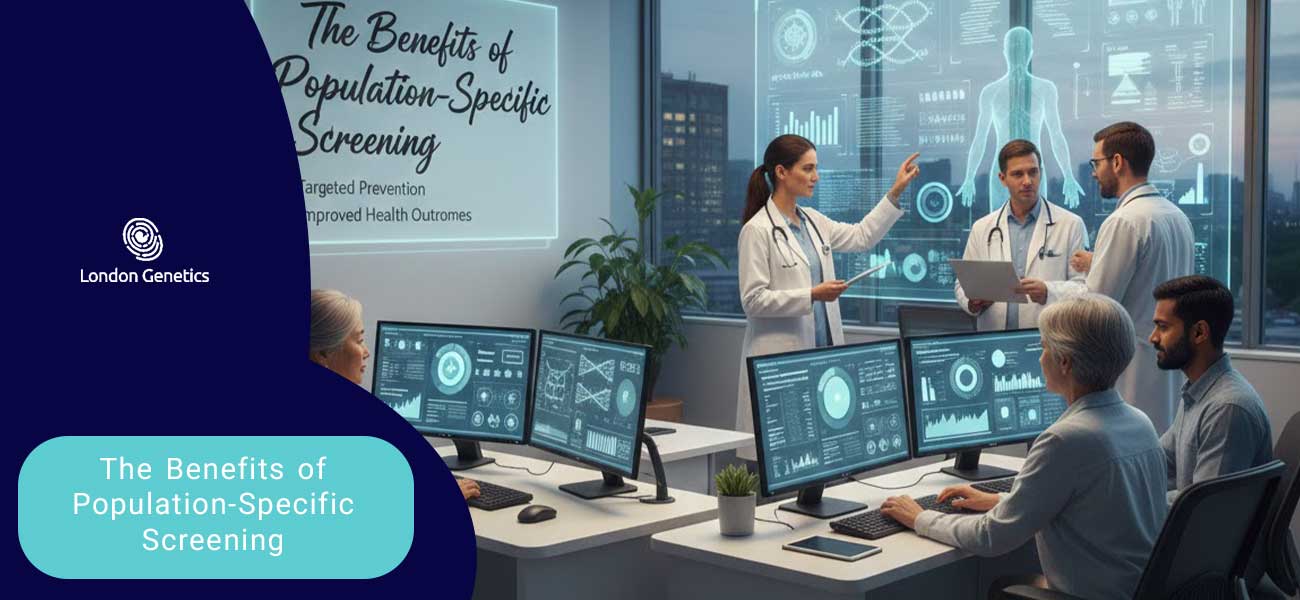
Why do we emphasize the need for screening tailored to your heritage? The answer lies in the precision of the results. Because Genetic Diversity dictates that certain mutations are unique to specific populations, a “general” screening panel might look for the wrong things entirely. Population-specific screening ensures that we are searching for the “right needles in the right haystacks.”
Enhanced Diagnostic Accuracy
When screening is calibrated to your ethnic background, the detection rate for potential disorders increases significantly. For instance, a screening panel designed for a European population might only test for the 30 most common mutations of a gene. However, in a person of South Asian or Middle Eastern descent, the pathogenic mutation could be one that isn’t even included in that standard Western panel. By leveraging our understanding of Genetic Diversity, we ensure that no critical information is overlooked.
Early Intervention and Effective Prevention
The ultimate goal of genetics is not just to predict, but to protect. Population-specific screening offers several clinical advantages:
-
Cost-Effectiveness: By focusing on the risks most likely to affect your specific group, we avoid unnecessary and expensive tests that offer little clinical value.
-
Reduced Anxiety: A targeted approach reduces the chance of finding “uncertain variants” that can cause undue stress without providing clear medical answers.
-
Proactive Management: Identifying a risk early allows for tailored surveillance. For example, knowing a specific Cancer Genetic Counselling risk allows for earlier screenings or preventative lifestyle adjustments.
Informed Family Planning
For couples, understanding their combined Genetic Diversity is the cornerstone of a healthy future. Population-specific screening allows us to identify carrier statuses that are common within their shared heritage, providing them with the clarity needed to make informed decisions before or during pregnancy. This precision is what transforms a simple laboratory test into a powerful tool for life-long wellbeing.

Empowering Families Through Informed Choices
The true power of understanding Genetic Diversity lies in its ability to safeguard the future of your family. For many couples in London, the journey to parenthood is filled with hope, but it can also be clouded by concerns about inherited conditions. Genetic counselling transforms these concerns into a roadmap for informed decision-making.
Turning Knowledge into Action
When a family understands their unique genetic landscape, they move from a position of uncertainty to one of empowerment. Even when a risk is identified, modern reproductive medicine offers a variety of pathways to ensure that children are born healthy. Whether it is through advanced screening or personalised pregnancy management, the goal is always the same: to provide the best possible start in life for the next generation.
How We Support Your Family’s Journey
At London Genetics, we guide families through the complexities of Genetic Diversity by offering:
-
Pre-conception Clarity: Helping couples understand their carrier status and the likelihood of passing on specific traits before they even begin their journey to parenthood.
-
Support During Pregnancy: Offering Prenatal Genetic Counselling to interpret screening results like NIPT with precision and compassion.
-
Expertise in Complex Cases: For families who have experienced challenges, our Rare Disease Genetic Counselling provides deep diagnostic insights that general practitioners may miss.
Breaking the Cycle of Uncertainty
For many ethnic communities, certain conditions have been “silent” for generations. By choosing to engage with genetic science, you are not just looking at your own health; you are proactively breaking the cycle of inherited disorders for your children and grandchildren.
Making an informed choice is about having the courage to look at your DNA and the wisdom to act on what it reveals. With the right guidance, the incredible Genetic Diversity within your family becomes a tool for protection rather than a source of worry. We are here to ensure that your family’s story continues with health, clarity, and confidence.
Conclusion: Your Heritage, Your Health
The journey through your DNA is deeply personal—especially in a city shaped by global heritage.
Genetic Diversity is more than a scientific concept; it is the living history of your ancestors,
written into your biological code and central to proactive, precision-based healthcare.
By recognising the role of heritage in your genetic profile, you are able to:
- Move beyond generic healthcare toward truly personalised medicine
- Understand inherited risks with clarity rather than fear
- Make informed medical and family decisions based on evidence, not uncertainty
From Genetic Awareness to Empowerment:
– Identify silent carrier status and inherited predispositions.
– Distinguish natural genetic variation from clinically meaningful risk.
– Build a health strategy aligned with your unique ancestry and biology.
Why Heritage Matters in Precision Medicine:
Your DNA reflects generations of migration, adaptation, and survival.
When interpreted with cultural and ancestral insight, genetic information becomes
a powerful tool for prevention, protection, and long-term wellbeing.
Your Next Step:
Your DNA is your story.
Let us help you understand it, protect it, and use it to build a healthier future
for yourself—and for generations to come.