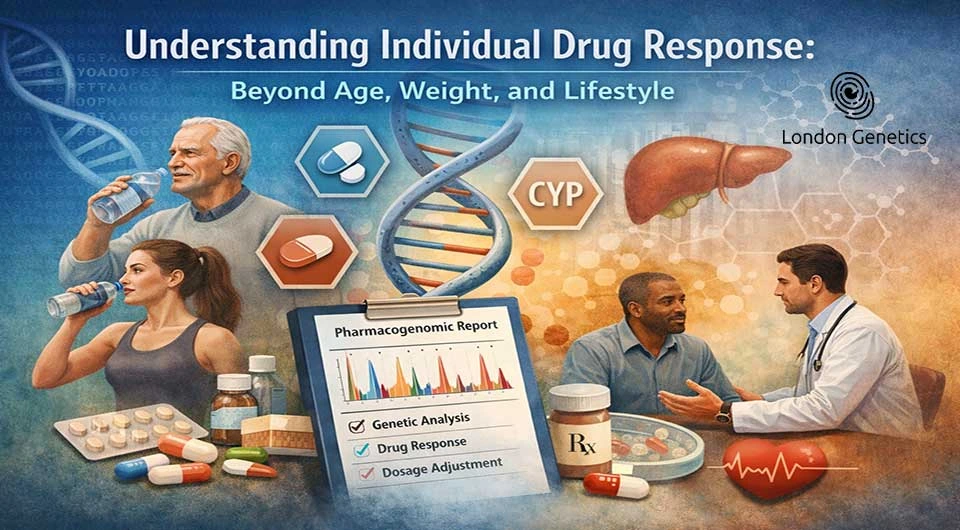
What Is Individual Drug Response?
Individual drug response describes the fact that people can react very differently to the same medication, even when the drug, dosage, and medical condition are identical. While medicines are developed based on large clinical studies, real-life treatment outcomes often vary from person to person.
For some individuals, a medication delivers the intended benefit with minimal side effects. For others, the same medicine may lead to limited effectiveness or unexpected adverse reactions. This variation in individual drug response highlights why standard prescribing guidelines cannot always predict how a treatment will work for every patient.
Although age, body weight, and lifestyle factors are commonly considered when prescribing medication, they do not fully explain why treatment outcomes differ. As discussed in [Why Do Medicines Affect People Differently?], the way the body processes and responds to drugs is influenced by a range of underlying biological factors that are not always apparent during routine clinical assessments.
Understanding individual drug response helps patients and clinicians move away from frustration and assumptions about treatment failure. Instead, it encourages a more informed perspective on why medication outcomes vary and why some people require adjustments or alternative approaches to achieve the best possible results.
Why Standard Medication Guidelines Don’t Work the Same for Everyone
Standard medication guidelines are designed to support safe and effective prescribing for the general population.
They are based on large clinical trials and population averages, offering structured recommendations for drug choice
and dosage. However, these guidelines cannot fully capture the biological diversity that influences how individuals
respond to the same medication.
In real-world clinical practice, patients rarely behave like the “average” participant in a clinical trial.
Two individuals receiving the same drug at the same dose may experience very different outcomes —
one achieving effective symptom control, while the other experiences minimal benefit or adverse side effects.
While guidelines account for factors such as age, body weight, organ function, and drug interactions,
they do not reflect deeper biological differences that affect how medications are absorbed, metabolised,
and utilised within the body. As a result, individual drug response often deviates from guideline predictions.
Another limitation of standard medication guidelines is their reliance on fixed dosing ranges.
Although these ranges are designed to be safe for most patients, they may be excessive for some
individuals and insufficient for others.
Variations in drug metabolism and handling mean that the same dose can lead to under-treatment in one
patient and excessive drug exposure in another. This highlights why standardised prescribing should
be viewed as a starting point rather than a personalised solution.
Recognising individual drug response allows clinicians to adjust treatment strategies,
monitor patients more closely, and move towards more personalised, biologically informed care.
Moving beyond averages towards personalised prescribing.
Understanding why standard medication guidelines do not work the same for everyone
supports safer, more effective treatment decisions that reflect real-world patient diversity
rather than population averages alone.
Common Factors That Influence Individual Drug Response
Several factors contribute to the differences seen in individual drug response. While genetics play a role, everyday variables such as age, body composition, and lifestyle also have a significant impact. Understanding these common influences helps clinicians tailor treatment plans and anticipate potential variations in medication outcomes.
Age and Physiological Changes
Age can profoundly affect individual drug response. As the body grows and ages, changes occur in organ function, enzyme activity, and drug metabolism. For instance, older adults often have slower liver and kidney clearance, which can increase drug exposure and the risk of side effects. Conversely, children may metabolise some medicines faster, requiring adjustments to achieve the desired effect. Recognising these physiological changes is essential for predicting individual drug response across different life stages.
Body Weight and Composition
Body weight and composition also influence how medications are absorbed, distributed, and metabolised. Individuals with higher body fat percentages may store certain drugs longer, while those with lower body mass may experience higher plasma concentrations from the same dose. These variations can alter both the effectiveness and tolerability of treatments, making body composition an important consideration when assessing individual drug response.
Lifestyle and Environmental Influences
Lifestyle and environmental factors can subtly, yet meaningfully, shape individual drug response. Diet, alcohol consumption, smoking, physical activity, and exposure to environmental chemicals all interact with the body’s metabolism and drug-handling processes. For example, caffeine or certain herbal supplements may speed up or slow down how medications work, influencing therapeutic outcomes. By accounting for these variables, clinicians can better anticipate and manage differences in individual drug response.
Less Obvious Factors Behind Different Drug Responses
Beyond age, weight, and lifestyle, several hidden factors significantly influence how patients respond to medications.
Understanding these subtleties allows clinicians to anticipate variability and improve treatment outcomes.
 Hover over each box to explore key hidden variables!

Variations in liver enzymes, especially the cytochrome P450 (CYP450) family, influence how quickly medications are metabolised.
Rapid metabolizers: Break down drugs quickly, potentially reducing efficacy.
Slow metabolizers: Retain drugs longer, increasing risk of side effects.
Recognising these metabolic differences is crucial for predicting treatment outcomes and adjusting dosages.

Not all drugs are absorbed or distributed the same way across individuals.
Factors such as gastrointestinal function, blood flow, and tissue composition can alter how fast a drug reaches its target sites.
These variations impact both efficacy and tolerability, contributing to unexpected responses even when standard dosing guidelines are followed.

Concurrent medications can affect absorption, metabolism, or elimination of each other.
Polypharmacy, common in older adults or those with chronic conditions, can enhance or reduce therapeutic effects unexpectedly.
Clinicians must carefully evaluate these interactions to optimise treatment and avoid adverse reactions.
Key Takeaways:
Individual drug response is influenced by metabolism, absorption, distribution, and medication interactions.
Understanding these less obvious factors is essential for safe, effective, and personalised prescribing.
Why Two Patients With the Same Diagnosis Can Have Different Outcomes
Even when two patients share the same diagnosis and receive identical treatments, their individual drug response can differ dramatically. This variation highlights that effective healthcare requires more than simply following standard protocols; it demands an understanding of the unique characteristics of each patient.
Several factors contribute to these differing outcomes. Genetic variations can influence how a patient metabolises or responds to medications, while physiological differences such as age, organ function, and body composition further affect treatment effectiveness. Lifestyle and environmental influences, including diet, exercise, and exposure to other substances, also play a part.
These combined factors mean that what works well for one patient may be ineffective or even harmful for another. Recognising this reality encourages clinicians to move beyond a one-size-fits-all approach and consider personalised strategies. By understanding individual drug response, healthcare providers can adjust dosing, select alternative therapies, or implement closer monitoring, ensuring that treatment decisions are tailored to each patient’s needs.
Ultimately, appreciating why two patients with the same diagnosis can experience different outcomes reinforces the importance of personalised medicine and the role of individual drug response in achieving safer and more effective treatments.
When Individual Drug Response Becomes Clinically Significant
Individual drug response becomes clinically significant when variations in how a patient reacts to medication lead to either suboptimal outcomes or increased risk of adverse effects. In these situations, the differences are not minor—they can influence whether a treatment is effective, tolerated, or even safe.
For example, some patients may experience serious side effects from a standard dose, while others may see little benefit despite following the same prescription guidelines. Recognising these differences is critical for preventing harm and improving therapeutic outcomes.
Understanding clinically significant variations often involves specialised testing to analyse how a patient’s body processes and responds to medications. This is where pharmacogenomics plays a pivotal role. By examining a patient’s genetic profile, clinicians can predict drug metabolism, absorption, and compatibility, allowing them to tailor treatments to achieve maximum effectiveness and safety.
Ultimately, recognising when individual drug response matters clinically empowers healthcare providers to move from a “trial-and-error” approach to a personalised strategy, ensuring that every patient receives the most appropriate care based on their unique biology.
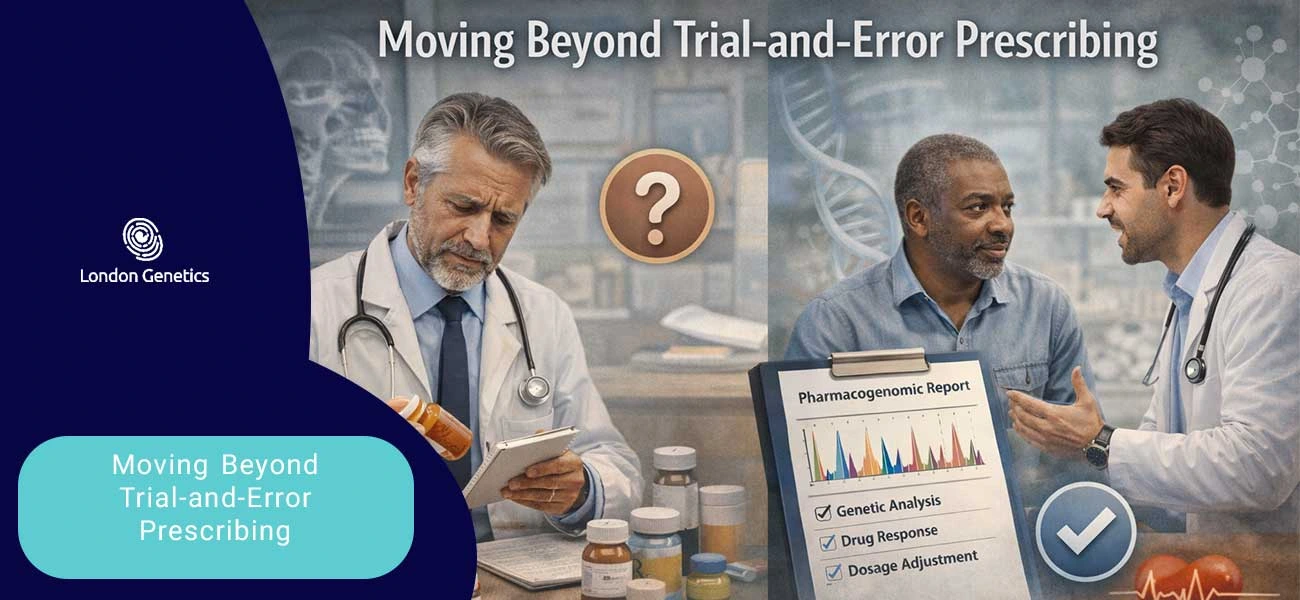
Moving Beyond Trial-and-Error Prescribing
Traditional prescribing methods often rely on a trial-and-error approach, where clinicians select medications based on general guidelines and adjust over time according to patient responses. While this method has been standard practice for decades, it does not account for the wide variations seen in individual drug response. The result is a cycle of repeated adjustments, delayed treatment effectiveness, and increased risk of side effects.
For many patients, this trial-and-error process can be frustrating and even harmful. For instance, in [Why Do Medicines Affect People Differently?], we explored how genetic and physiological factors can cause medications to work well for one patient but poorly for another. Similarly, articles such as [Genomics of Drug Metabolism and Its Role in Personalized Medicine] demonstrate that variations in enzyme activity and drug metabolism can dramatically alter treatment outcomes, even when patients appear clinically similar.
Moving beyond this traditional approach involves integrating individual patient data into the prescribing process. Factors such as age, weight, body composition, lifestyle, and environmental influences provide useful context, but the most transformative insights come from pharmacogenomics. By analysing a patient’s genetic profile, clinicians can predict how drugs will be metabolised, which medications are likely to be effective, and what dosages are optimal for that individual. This reduces uncertainty and minimises adverse reactions, effectively turning guesswork into evidence-based decision-making.
For patients with psychiatric conditions, [Why Is Antidepressant Response Effective in Some Patients but Not in Others?] illustrates how pharmacogenomic testing can guide medication selection, helping avoid ineffective treatments and shortening the time to symptom relief. Likewise, in cardiovascular care, understanding individual drug response through pharmacogenomics, as described in [Cardiovascular Drug Response Testing], allows clinicians to tailor therapies for blood thinners, beta-blockers, and statins, improving both safety and efficacy.
Ultimately, moving beyond trial-and-error prescribing is about recognising that each patient is unique. Standard guidelines serve as a starting point, but they cannot replace personalised insight. By leveraging individual drug response data, clinicians can create treatment plans that are proactive rather than reactive, maximising therapeutic benefits while minimising risk. This approach exemplifies the promise of pharmacogenomics: a future where personalised medicine guides every decision, ensuring that patients receive the right drug, at the right dose, at the right time.
Conclusion: Why Medication Response Is Never One-Size-Fits-All
Understanding individual drug response is essential for safe and effective care. Factors ranging from age, body composition, and lifestyle to metabolism, absorption, and drug interactions all contribute to why patients respond differently to the same medication.
Traditional “one-size-fits-all” prescribing often leads to delayed benefits, side effects, or treatment failure. By embracing a personalised approach informed by pharmacogenomics, clinicians can tailor treatments to each patient’s unique biology, improving therapeutic outcomes and safety.
Articles such as [Why Two Patients With the Same Diagnosis Can Have Different Outcomes] and [Moving Beyond Trial-and-Error Prescribing] illustrate how recognising these differences is critical across medical fields.
Integrating pharmacogenomic insights ensures that medications are not only effective but also compatible with a patient’s genetic profile, truly bringing precision medicine to life.
From Insight to Action:
– Personalised prescribing aligns treatment with each patient’s unique physiology and genetics.
– Recognising metabolic, absorption, and drug interaction differences reduces adverse effects.
– Pharmacogenomics transforms trial-and-error prescribing into evidence-based, precise medication plans.
Why Individualised Medicine Matters:
No two patients respond the same way to the same drug.
By understanding individual variability, clinicians can optimise therapy, improve outcomes, and deliver patient-centred care.
Your Next Step:
Explore how medication compatibility testing can guide safer and more effective treatments tailored to your genetic profile.