Introduction: The Evolving Landscape of Male Fertility in the UK
For many years, discussions around fertility have predominantly focused on women, leaving male reproductive health largely overlooked. However, as our understanding of reproductive medicine evolves, attention is finally turning to male infertility and its significant impact on couples trying to conceive. Current clinical evidence in the UK suggests that in roughly 50% of couples facing conception challenges, a male factor is either the primary or a contributing cause. Despite this, male infertility is often underestimated or treated in overly simplistic terms.
It is a common misconception that a standard semen analysis provides a definitive assessment of male fertility. While such tests offer basic insights into sperm count and motility, they frequently fail to detect deeper, more complex issues. A man may present with a “normal” sperm count yet still encounter considerable difficulties due to the genetic quality of his sperm. Traditional testing, therefore, examines the ‘vehicle’ but not the ‘genetic cargo’ it carries—underscoring the limitations of conventional approaches in addressing male infertility comprehensively.
At London Genetics, we specialise in bridging this diagnostic gap. By integrating Reproductive Genetics into the investigation process, we can solve the complex puzzles of unexplained infertility. From identifying chromosomal rearrangements to assessing DNA fragmentation, our goal is to provide London’s families with the clarity and scientific insight needed to ensure the best possible start for their future children.
When to Suspect a Genetic Cause in Male Infertility
Knowing when to move beyond basic fertility assessments
and consider advanced genetic screening is critical for many men.
In the UK, clinical guidelines recommend deeper investigation
when routine tests fail to explain delayed conception.
Identifying genetic causes early can significantly improve outcomes.
- Sperm count below 5 million/ml indicates severe oligozoospermia
- Azoospermia refers to a complete absence of sperm in semen
- Both conditions strongly suggest chromosomal or single-gene disorders
In these cases, genetic abnormalities such as Y-chromosome microdeletions
or karyotype anomalies are frequently identified and require specialist testing.
When couples experience repeated miscarriages,
attention is often focused on maternal factors alone.
- Paternal chromosomal rearrangements can impair embryo development
- Sperm DNA integrity plays a critical role in early pregnancy
- Genetic causes in men are commonly overlooked
Advanced genetic testing can uncover hidden paternal factors
that contribute to recurrent pregnancy loss.
- ICSI overcomes physical sperm limitations, not genetic defects
- DNA fragmentation and chromosomal errors affect embryo viability
- High-quality eggs cannot compensate for poor sperm genetics
Repeated IVF or ICSI failure often signals underlying sperm genetic damage.
Identifying these risks beforehand can dramatically improve success rates.
- Increasing paternal age raises the risk of de novo genetic mutations
- Older sperm is associated with higher DNA fragmentation rates
- Genetic risks increase even when standard semen parameters appear normal
As paternal age rises, genetic screening becomes an essential component
of fertility evaluation and treatment planning.
The Critical Link: Sperm Genetics and IVF Success.
While techniques like ICSI are powerful, they cannot repair defective DNA.
If sperm carries genetic damage, embryos may fail to implant or develop.
By assessing sperm genetic health before treatment,
clinicians can improve live birth rates and support the birth of healthy children.
Common Genetic Disorders Affecting Male Fertility
Understanding the genetic factors behind male infertility is crucial for effective diagnosis and treatment. At our London clinic, we frequently encounter several key genetic conditions that can disrupt sperm production or function. While these disorders are complex, many can be managed successfully with tailored treatment plans.
1. Chromosomal Abnormalities: Klinefelter Syndrome and Translocations
The most common genetic cause of male infertility is Klinefelter Syndrome, where a man is born with an extra X chromosome (47,XXY). This condition often results in lower testosterone levels and little to no sperm production.
In addition, some men carry Balanced Translocations. In these cases, all genetic material is present but “rearranged” or attached to the wrong chromosome. Although the man may be otherwise healthy, his sperm can carry an unbalanced amount of DNA, which can lead to unsuccessful conception or genetic anomalies in the embryo.
2. Y-Chromosome Microdeletions
The Y chromosome is essential for male development and sperm production. Microdeletions—tiny missing segments of DNA too small to be seen under a standard microscope—commonly affect the AZF (Azoospermia Factor) region. Depending on which section is missing, we can determine whether sperm retrieval for IVF/ICSI is possible or if alternative fertility options should be considered.
3. Cystic Fibrosis (CFTR) Gene Mutations
Surprisingly, mutations in the CFTR gene—the same gene responsible for Cystic Fibrosis—can lead to male infertility without affecting the lungs or digestive system. This condition, known as Congenital Bilateral Absence of the Vas Deferens (CBAVD), means the tubes that transport sperm are absent from birth, preventing natural conception.
For a deeper look at how these screening programmes work, you can read our detailed guide on Advancing Cystic Fibrosis Diagnosis. Understanding whether you are a carrier of this genetic condition is essential before proceeding with any reproductive treatment.
Advanced Diagnostic Tools at London Genetics
At our Marylebone clinic, we use state-of-the-art genomic diagnostics
to deliver a comprehensive evaluation of male fertility.
While standard semen analysis remains essential,
advanced genetic testing allows us to assess the deeper genetic health of spermatozoa.
Karyotyping provides a high-level assessment of an individual’s full chromosomal set using a blood sample.
What it detects: Structural rearrangements such as translocations or inversions, and numerical abnormalities including extra or missing chromosomes.
This “bird’s-eye view” of the genome ensures major chromosomal issues are identified before initiating fertility treatment.
A normal sperm count does not always equate to optimal fertility.
DNA fragmentation testing measures the proportion of sperm carrying damaged or broken DNA strands.
Elevated fragmentation is associated with oxidative stress, lifestyle factors, and varicoceles, and is linked to IVF failure and recurrent miscarriage.
In cases of severely reduced sperm count, Y-chromosome microdeletion (YCMD) screening is essential.
PCR-based analysis identifies missing genetic markers within the AZF regions of the Y chromosome.
Results guide clinical decisions, including the likelihood of successful surgical sperm retrieval (TESE) or the need to consider alternative reproductive options.
Advanced genetic diagnostics allow fertility care to move beyond surface-level analysis.
By identifying chromosomal, molecular, and DNA integrity issues early,
London Genetics delivers precision-guided fertility treatment,
maximising IVF success rates and supporting the best possible reproductive outcomes.
The Link Between Male Genetics and Recurrent Pregnancy Loss
For many years, clinical attention regarding miscarriage focused almost entirely on the maternal environment. However, advances in Reproductive Genetics have highlighted that the paternal contribution is equally crucial in maintaining a healthy pregnancy. When couples experience the heartbreak of recurrent pregnancy loss, assessing the genetic integrity of sperm is a vital step in addressing male infertility and improving outcomes.
How Sperm Abnormalities Can Lead to Pregnancy Loss
The journey from conception to a successful birth relies on the embryo following a precise genetic “instruction manual,” half of which is provided by the sperm. If the sperm carries chromosomal translocations or significant DNA fragmentation, the resulting embryo may appear normal under a microscope but can be biologically unstable.
This instability may result in:
-
Implantation Failure: The embryo is unable to attach to the uterine lining because its genetic code is insufficient to initiate the necessary biological signals.
-
Early Miscarriage: Although the pregnancy begins, genetic errors in the dividing cells can be “lethal,” prompting the body to naturally terminate the pregnancy.
Understanding the role of sperm genetics is therefore an essential aspect of tackling male infertility and supporting couples on their path to parenthood.
Understanding these Genetic Factors in Recurrent Pregnancy Loss is the first step toward a solution. By identifying whether the issue stems from paternal genetic mutations, we can offer targeted interventions such as PGT-A to select only the most viable embryos for transfer.
Paternal Age and Genetic Risks
It is also important to note that as men age, the risk of “de novo” (new) mutations in their sperm increases. This can impact not just the ability to conceive, but also the long-term health of the child. This mirrors the concerns often discussed in Late Pregnancy, reminding us that fertility is a shared journey with shared risks.
PGT-A and PGT-M: Advanced Solutions for Male Factor Infertility
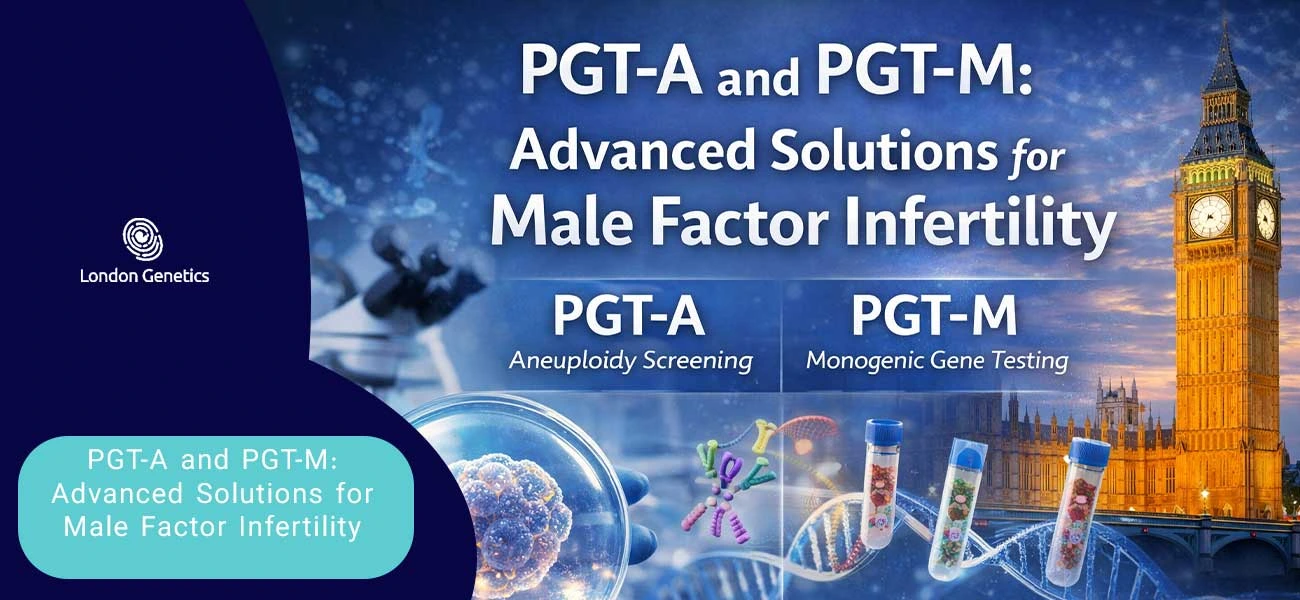
When genetic factors such as chromosomal translocations or Y-chromosome microdeletions are identified, the journey to parenthood can feel overwhelming. However, the integration of Preimplantation Genetic Testing (PGT) with IVF has transformed the way we approach male infertility. By screening embryos before transfer, we can select those with the highest genetic potential, significantly improving the chances of a successful pregnancy.
Overcoming Genetic Hurdles with Precision
Depending on the specific paternal genetic issue, our specialists employ two main types of testing:
-
PGT–A (Aneuploidy Screening): Particularly beneficial for men with high sperm DNA fragmentation or advanced paternal age, this test ensures embryos have the correct number of chromosomes. By avoiding the transfer of embryos likely to fail, PGT-A reduces miscarriage risk and enhances IVF success rates.
-
PGT-M (Monogenic/Single Gene Testing): For men who carry a known genetic condition—such as Cystic Fibrosis or Huntington’s Disease—PGT-M enables precise testing of embryos for that specific mutation. This ensures the condition is not passed on to the next generation.
Enhancing IVF Outcomes for Male Infertility
The combination of Reproductive Genetics and IVF transforms a “trial and error” approach into a targeted, scientifically informed process. For couples facing male infertility, this offers:
-
Reduced Time to Pregnancy: By prioritising the healthiest embryos first.
-
Minimised Emotional Burden: Lowering the risk of failed cycles and pregnancy loss.
-
Informed Decision-Making: Providing clear interpretation of genetic results so couples can proceed with confidence.
By embracing these advanced screening methods, families in London and beyond can overcome the traditional barriers of male infertility, turning what may initially seem like a complex diagnosis into a successful birth story.
Conclusion: Moving Forward with Clarity
Navigating the complexities of male infertility can be emotionally challenging,
but the journey does not have to continue without answers.
As explored throughout this guide, genetics plays a fundamental role in male reproductive health,
from chromosomal structure to the microscopic integrity of sperm DNA.
Understanding the cause behind fertility challenges is the most powerful step towards meaningful progress.
From Uncertainty to Precision:
– Advanced genetic diagnostics replace guesswork with clear, evidence-based insights.
– Identifying chromosomal, molecular, and DNA integrity issues allows for targeted fertility strategies.
– Genetic clarity supports informed decisions in IVF, ICSI, and embryo selection through PGT.
Why Reproductive Genetics Matters:
By uncovering the underlying genetic factors, clinicians can address fertility challenges at their root.
This approach improves treatment planning, reduces repeated IVF failure,
and safeguards the long-term health of future offspring.
Our Commitment at London Genetics:
Located in the heart of London, our clinic provides world-class reproductive genetic care.
Under the expert leadership of Dr Ehsan Ghayoor Karimani,
we deliver bespoke assessments tailored to each individual and couple’s unique circumstances.
Your Next Step:
If you have experienced unexplained infertility, recurrent pregnancy loss,
or unsuccessful IVF cycles, it may be time to explore the genetic factors involved.
Regain control of your fertility journey with clarity, confidence, and expert support.