
Why Knowing How to Prepare for Genetic Counselling Matters
A genetic counselling appointment is an important opportunity to understand how your personal and family medical history may affect your health and future care. The more accurately you prepare beforehand, the more useful your consultation can be.
Your genetic counsellor or clinical geneticist will assess information from across your family, looking for patterns that may suggest an inherited condition or help distinguish familial risk from more common, sporadic disease. Details such as the age at diagnosis, the specific type of a tumour, previous genetic test results, and the health history of relatives can all contribute to this assessment.
Knowing how to prepare for genetic counselling also helps you make the most of your appointment. Bringing relevant medical records, preparing a family history, and noting the questions or concerns you want to discuss can give your specialist a clearer picture of your circumstances and support a more personalised assessment of your circumstances and appropriate next steps.
How to Prepare Family Medical Records for Genetic Counselling
Gathering accurate medical records is an important part of preparing for genetic counselling.
Rather than relying only on memory, bringing relevant clinical documents can help your specialist build a clearer picture of your family’s medical history and assess whether further genetic assessment may be appropriate.
- Pathology Reports: Bring available biopsy or pathology reports that confirm the diagnosis and relevant tumour characteristics.
- Histological Details: Where available, include information about the tumour type, primary site, and other findings recorded in the original report.
- Previous Genetic Tests: Include any genetic test results, variant reports, or other relevant laboratory findings from family members.
Having these documents available can help your specialist review the family history using confirmed clinical information rather than recollection alone.
Accurate ages at diagnosis can provide important context when assessing your family medical history.
- Record the age of each relative when they were first diagnosed with a significant condition.
- Where possible, distinguish between separate primary conditions and a recurrence or spread of an existing disease.
- Note significant patterns such as cancers affecting both sides of a paired organ or more than one primary cancer in the same person.
- Surgical Records: Bring relevant operation reports, surgical summaries, or discharge letters where available.
- Treatment History: Record significant previous treatments and, where relevant, the type of treatment received for a diagnosed condition.
- Screening History: Include relevant screening or surveillance records, such as mammograms, breast MRI scans, or colonoscopy reports.
Organising these records before your appointment can make it easier for your clinical genetics team to understand the wider family history and focus the consultation on the information that matters most.
Accurate medical records can turn family recollections into useful clinical information.
By gathering relevant documents before your appointment, you give your clinical genetics team a clearer foundation for assessing your personal and family history and discussing appropriate next steps.
How to Prepare Your Family Tree for Genetic Counselling
Preparing a three-generation family tree can provide your genetic counsellor or clinical geneticist with a clearer overview of your family’s medical history. Where possible, include information from both your maternal and paternal sides, even if some details are incomplete or uncertain.
You do not need to create a formal medical pedigree yourself. The aim is simply to gather as much relevant information as you can before your appointment, including the relationships between family members, their ages, major medical conditions, and any known diagnoses.
1. First-Degree Relatives
Start with your closest biological relatives and record relevant medical information for:
- Parents (mother and father)
- Full and half-siblings
- Children
Where possible, note their current age, significant medical conditions, and any known diagnoses. For relatives who have died, record their age at death and the known cause of death.
2. Second-Degree Relatives
Next, expand your family history to include relatives on both sides of the family:
- Maternal and paternal grandparents
- Aunts and uncles
- Nieces and nephews
Pay particular attention to relatives who developed cancer or other significant conditions, especially when similar diagnoses occurred in more than one member of the same side of the family. This information can be useful when understanding cancer in the family.
3. Third-Degree Relatives
Where information is available, include more distant relatives such as:
- First cousins
- Great-grandparents
You may not know the complete medical history of more distant relatives, and that is perfectly normal. Record whatever reliable information you can find rather than trying to fill gaps with assumptions.
Key Information to Record for Each Relative
Once you have mapped your three-generation family tree, try to record a few key details for each relative. Even when some information is incomplete, the details you can provide may help your genetic counsellor build a clearer picture of your family medical history.
- Current Vital Status: Record the current age of living relatives. For relatives who have died, note their age at death and the known cause of death where available.
- Medical Diagnoses: Record significant medical conditions and confirmed diagnoses. For relatives with cancer, note the primary cancer diagnosis where known rather than assuming that a cancer found in another organ represents a separate primary cancer.
- Age at First Diagnosis: Record the age at which a relative was first diagnosed with a significant condition or cancer. If you do not know the exact age, an approximate age or age range can still be useful.
- Multiple or Bilateral Cancers: Note whether a relative has had more than one primary cancer or cancer affecting both sides of a paired organ. These details may provide useful context when your family history is assessed.
- Ancestry and Ethnic Heritage: Record relevant ancestry or ethnic background where known. Certain inherited conditions and genetic variants are more common in particular populations, so this information may be relevant to your genetic risk assessment.
- Unaffected Relatives: Include relatives who have not had the condition or cancer being discussed, together with their current age where known. Information about unaffected family members can also contribute to a more complete family history.
You do not need to have every detail before your appointment. Focus on recording information that you know to be accurate, and clearly identify anything that is uncertain or unavailable. Your genetic counsellor can help determine whether additional family information would be useful during your assessment.
Essential Medical Documents
Gathering relevant medical records is an important part of preparing for genetic counselling. Bringing available diagnostic, pathology, surgical, genetic, and screening records can help your specialist review your family history using accurate clinical information rather than relying on memory alone.
| Document Type | Why It Matters | What to Do If Unavailable |
|---|---|---|
| Pathology & Biopsy Reports | Provides confirmed information about a diagnosis, including the primary site and relevant pathology findings. | Request a copy or summary from the hospital or specialist team involved in the diagnosis. |
| Prior Family Genetic Test Results | Previous genetic test results from relatives may provide useful information about known findings within the family. | Ask the relative for a copy of their genetic test report or laboratory summary, where available. |
| Surgical Summaries & Discharge Letters | Provides useful details about significant operations, diagnoses, and relevant dates in a person’s medical history. | Check available GP or hospital records, or ask the relevant healthcare provider for a medical summary. |
| Death Certificates & Records | Can help confirm the age at death and recorded cause of death for relatives included in your family history. | If official records are unavailable, record the approximate age, year of death, and known cause of death where possible. |
| Diagnostic Imaging & Screening History | Can provide additional information about previous diagnoses, investigations, and significant screening history. | Record approximate dates, healthcare providers, and any confirmed results that you or your relatives can reliably recall. |
Key Questions on How to Prepare for Genetic Counselling
Entering your consultation with a pre-written list of targeted questions is one of the most practical ways to prepare for genetic counselling. A genetics consultation covers complex clinical concepts, risk stratification models, and preventative options; having structured questions ensures you leave the appointment with clarity and an actionable medical plan.
Here is a curated checklist of essential questions to write down before you attend your appointment:
1. Questions About Familial Risk & Inheritance
- Based on my family pedigree, does my lineage suggest a hereditary cancer syndrome or a sporadic pattern?
- What is the likelihood that the cancers in my family are driven by an inherited pathogenic gene variant?
- How does my specific family history influence the risk for my children, siblings, and extended relatives?
- Does my ethnic background or ancestry increase the baseline probability of specific genetic mutations?
2. Questions About Genetic Testing Options
- Am I, or an affected relative, the most appropriate person in the family to undergo initial DNA testing?
- What type of test is recommended for my circumstances: a single-site familial test, a focused multi-gene panel, or comprehensive whole-genome sequencing?
- What are the potential testing outcomes (e.g., pathogenic mutation, benign result, or a Variant of Uncertain Significance / VUS)?
- What is the expected turnaround time for laboratory processing and receiving confirmed results?
3. Questions About Clinical Management & Prevention
- If a pathogenic mutation is identified, what tailored screening pathways (such as early MRIs, mammograms, or colonoscopies) are recommended under UK and NHS guidelines?
- Are risk-reducing medications (chemoprevention) or prophylactic surgical options appropriate to discuss for my risk category?
- If my test result is negative, does my family history still place me in a moderate or high-risk surveillance category?
- How often should our preventative management plan be reviewed as new clinical genetic research emerges?
4. Questions About Practical, Emotional, and Family Support
- How will the results of this test impact my existing life insurance, critical illness policies, or income protection under the UK Code on Genetic Testing and Insurance?
- What clinical support or psychological guidance is available to help me share positive results with at-risk relatives?
- Can London Genetics provide a formal clinical summary letter to share with my NHS GP or local specialist team?
Why Writing Down Your Questions Matters
It is natural to have questions or concerns before a genetic counselling appointment, particularly when your consultation may involve unfamiliar medical or genetic terminology. Writing down your questions in advance can help you make the most of your appointment and ensure that the topics most important to you and your family are discussed.
Consider noting any questions about your family history, genetic testing, possible implications for relatives, or what the next steps may involve. You can then use these notes to guide the conversation and make sure you leave the consultation with a clear understanding of the information discussed.
If your concerns relate specifically to a family history of cancer, you can also consider booking a cancer genetic counselling consultation with a specialist team. This provides a more focused route for discussing questions related to inherited cancer risk.
Emotional Readiness
When you prepare for genetic counselling, psychological and emotional readiness is just as essential as gathering medical paperwork. Exploring inherited health risks often brings complex emotions, but understanding the decision-making journey empowers you to approach genetic testing with clarity, autonomy, and emotional resilience.
By taking time to prepare for genetic counselling from an emotional perspective, you ensure that every choice aligns with your personal values and life goals. Our clinic offers a supportive, compassionate environment where you can explore every option with confidence and complete peace of mind.
Taking the Next Step: Genetic Assessment with Dr Ghayoor Karimiani
Taking the time to prepare for genetic counselling by gathering your medical documents, charting your three-generation pedigree, and clarifying your questions lays the groundwork for an accurate clinical evaluation. However, the true value of these records emerges when they are analysed by an experienced clinical genetics consultant who can translate raw family data into actionable, life-saving preventative pathways.
At London Genetics, your consultation is led directly by Dr Ehsan Ghayoor Karimiani, a distinguished specialist in clinical and molecular genetics with extensive international and UK NHS research credentials.
What to Expect During Your Consultation:
- Comprehensive Pedigree Analysis: Dr Karimiani will review your three-generation health tree, identifying specific familial inheritance patterns and stratifying your empiric risk against NHS and international clinical guidelines.
- Tailored Diagnostic & Testing Roadmaps: Rather than broad, unnecessary screening, you receive precise recommendations for targeted single-gene analysis, bespoke multi-gene oncology panels, or advanced whole-genome sequencing based on your exact profile.
- Holistic Preventative Strategies: Beyond the laboratory results, Dr Karimiani provides personalised surveillance protocols—including specialised early-detection imaging, chemoprevention options, and proactive lifestyle adjustments.
- Empathetic, Unrushed Clinical Support: You are provided with dedicated time to discuss psychological readiness, insurance implications under the UK Code on Genetic Testing, and the most effective ways to communicate vital health insights to your relatives.
Empower Your Family’s Health Future
You do not have to navigate the complexities of hereditary cancer risk or genetic predispositions alone. Once you prepare for genetic counselling, taking the next step with a trusted expert transforms apprehension into proactive control and lasting peace of mind.
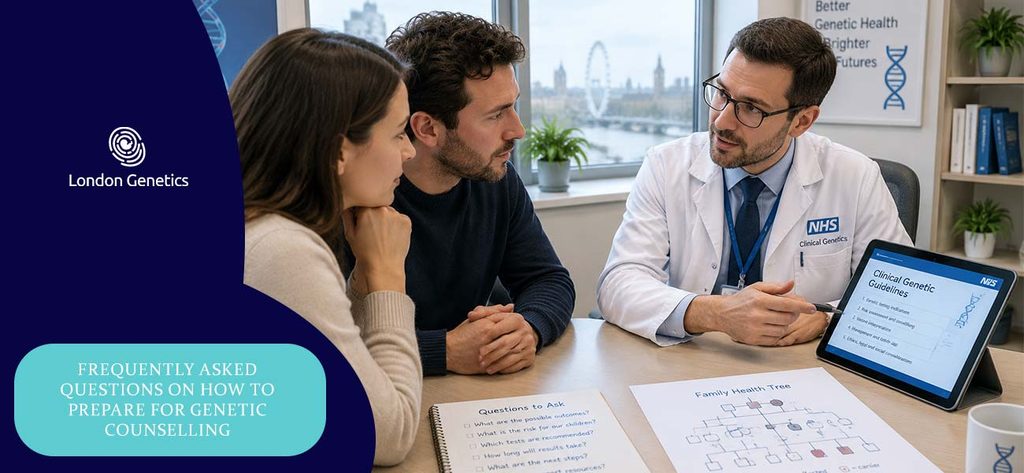
Frequently Asked Questions on How to Prepare for Genetic Counselling
1. What should I do if my family medical history is incomplete or unknown?
It is common not to have complete medical information about every relative, particularly for extended family members or relatives who have died. Bring whatever reliable information you have, such as approximate ages, known diagnoses, significant medical conditions, or cause of death.
You do not need to have a complete family history before your appointment. Your genetic counsellor can help you understand what information is available and identify any important details that may be useful to discuss.
2. Can my partner, spouse, or a close family member attend the session with me?
Yes. You can bring a partner, spouse, or trusted family member if you would find their support helpful. Having someone with you may also make it easier to remember information discussed during the appointment or take notes.
If the consultation concerns family medical history, a relative who knows relevant details about your family may also be able to provide useful information.
3. Do I have to have genetic testing during a genetic counselling appointment?
No. Genetic counselling does not mean that you have to proceed with genetic testing.
The consultation gives you an opportunity to discuss your personal and family medical history, ask questions, and understand whether further assessment or testing may be appropriate. You can take time to consider the information discussed before deciding on any next steps.
4. How long does a typical genetic counselling consultation take?
An initial genetic counselling consultation typically lasts around 45 to 60 minutes. The exact length can vary depending on your medical history, the information available about your family, and the questions you would like to discuss.
Preparing your family history, relevant medical documents, and questions in advance can help you make the most of the appointment.
5. Will genetic counselling affect my UK life insurance?
Genetic counselling itself is not the same as having a genetic test result. Questions about the use or disclosure of genetic test results for insurance are subject to UK rules and industry guidance, which can change over time.
If insurance is an important concern for you, it is reasonable to raise this during your consultation and check the current guidance before making decisions about genetic testing or insurance applications.