Introduction
For many families navigating the complex journey of a suspected genetic condition, receiving a negative result from a standard test can feel like hitting a brick wall. Whole Exome Sequencing (WES) has revolutionised medical genetics, acting as a crucial first step in identifying the molecular causes of disease. However, despite its efficiency, it is important to understand that WES is not a panacea; it focuses only on the coding regions of the genome and often falls short, yielding a diagnostic rate of approximately 40-60%.
The frustration of searching for answers, particularly when dealing with rare disease diagnosis in children or adults, can be overwhelming. Yet, a negative WES result does not mark the end of the road. Instead, it indicates the need to utilise more comprehensive, advanced genomic tools to look deeper into the remaining 98% of your DNA.
At London Genetics, we specialise in bridging the gap between cutting-edge research and clinical application. By leveraging technologies such as Whole Genome Sequencing (WGS) and RNA Sequencing, we aim to break through these diagnostic deadlocks, providing families with the clarity they deserve. If you have hit a stalemate in your diagnostic journey, our expert Genomic Research services are here to help identify the hidden variants traditional testing might miss. To understand the foundational limitations of early-stage testing, you may also find our guide on why re-analysing Whole Genome Sequencing (WGS) data matters invaluable.
Why WES is Not Enough: The Limits of Whole Exome Sequencing
Whole Exome Sequencing (WES) analyses only the protein-coding regions of the genome—the exome.
While these regions contain approximately 85% of known disease-causing mutations, they make up just 1–2% of total DNA.
This focus leaves many potentially pathogenic variants undetected, limiting the diagnostic yield for rare diseases.
Variants located deep within introns or in promoter/enhancer regions
can affect gene expression timing and levels.
WES does not reliably capture these non-coding regions, leaving important disease-causing mutations undiscovered.
Large deletions, duplications, or rearrangements of DNA—known as Copy Number Variants (CNVs)—
are often challenging to detect with standard WES analysis pipelines.
Complex mutations involving repeated DNA sequences are a common cause of certain neurological disorders.
WES cannot reliably identify these repeat expansions, leaving patients without a definitive diagnosis.
Key Takeaway:
While WES is powerful, it does not capture all pathogenic variants.
Advanced genomic tools, such as Whole Genome Sequencing, are required
to detect non-coding mutations, structural variants, and repeat expansions,
providing a more comprehensive analysis for accurate rare disease diagnosis.
Advanced Genomic Tools: The Next Step in Diagnosis
When standard testing fails to provide an answer, moving beyond the exome is essential. Utilising advanced genomic tools allows us to interrogate the genome with much higher resolution, uncovering genetic causes that were previously invisible.
Whole Genome Sequencing (WGS)
Unlike WES, which focuses only on the coding regions, Whole Genome Sequencing (WGS) scans all 3 billion base pairs of a person’s DNA. This comprehensive approach is vital for rare disease diagnosis as it captures:
-
Non-coding regions: Identifying mutations in regulatory areas that control gene expression.
-
Structural variants: Accurately detecting large deletions, duplications, and rearrangements that WES often misses. As discussed in our previous analysis, why re-analysing Whole Genome Sequencing (WGS) data matters, new insights can often be found even in previously interpreted data.
RNA Sequencing (RNA-Seq)
While DNA sequencing tells us what mutations are present, it doesn’t always tell us how they affect cellular function. RNA Sequencing (RNA-Seq) bridges this gap by measuring gene expression levels.
-
Functional Validation: RNA-Seq can confirm if a DNA variant is actually causing a gene to be expressed improperly, producing a faulty protein.
-
Diagnostic Power: It is particularly useful for assessing splice-site mutations. For a detailed breakdown of this technology, refer to our comprehensive guide: What is RNA Sequencing? A Complete Guide to RNA-Seq Technology.
Long-Read Sequencing
Certain genetic conditions are caused by complex structural rearrangements or repetitive DNA sequences that are difficult to map using traditional “short-read” technologies. Long-Read Sequencing offers a solution by reading much longer fragments of DNA, allowing for the precise identification of complex genetic structures and repeat expansions responsible for some neurological disorders.
The Role of Expert Consultation in Rare Disease Diagnosis
Generating genomic data is only the first step in rare disease diagnostics.
Accurate interpretation of this complex data is essential to identify the true genetic cause
and guide effective clinical management.

Hover over each box to understand how specialist genomic consultation ensures actionable rare disease diagnoses.

Whole Genome Sequencing and RNA-Seq produce vast datasets.
Specialist consultation is needed to distinguish benign variations from pathogenic mutations
responsible for the rare disease.
Without expert interpretation, the true cause may remain hidden, preventing accurate diagnosis and treatment.

Experts correlate genomic results with clinical symptoms, medical history, and family history.
This ensures the diagnosis is actionable, guiding personalised management plans,
targeted therapies, and informed family planning decisions.

Specialist consultation ensures families receive accurate interpretation,
actionable insights, and confidence in next steps for treatment and care.
Key Takeaway:
Expert genomic consultation is essential in rare disease diagnosis.
By transforming raw data into clinically actionable insights,
patients and families gain clarity, personalised treatment plans,
and the ability to make informed decisions about care and future planning.
The Future of Rare Disease Diagnosis in London
London is rapidly becoming the global epicentre for genomic innovation, offering unprecedented hope for patients with undiagnosed conditions. The city’s unique ecosystem, combining world-class institutions like the Francis Crick Institute and Genomics England with the clinical expertise of NHS hospitals, ensures that advanced genomic tools are transitioning from research laboratories to clinical practice faster than ever before.
A Hub of Collaborative Innovation
The future of rare disease diagnosis in London is built on collaboration. By integrating Whole Genome Sequencing and RNA-Seq into routine healthcare pathways, London Genetics and its partner institutions are reducing the time patients spend in the “diagnostic odyssey.” This collaborative approach means that complex cases are reviewed by multidisciplinary teams, ensuring the highest standards of genomics consulting.
Personalised Care for Every Patient
The ultimate goal of this technological revolution is true personalised medicine. The future involves moving beyond generic rare disease diagnosis towards treatments tailored to the specific genetic makeup of each patient. By analysing the full genome and its functional output, clinicians can identify precise therapeutic targets. This tailored approach not only improves diagnostic accuracy but also opens the door to targeted therapies, transforming the future of healthcare for families across the UK and beyond. This is the new standard of genomics consulting.
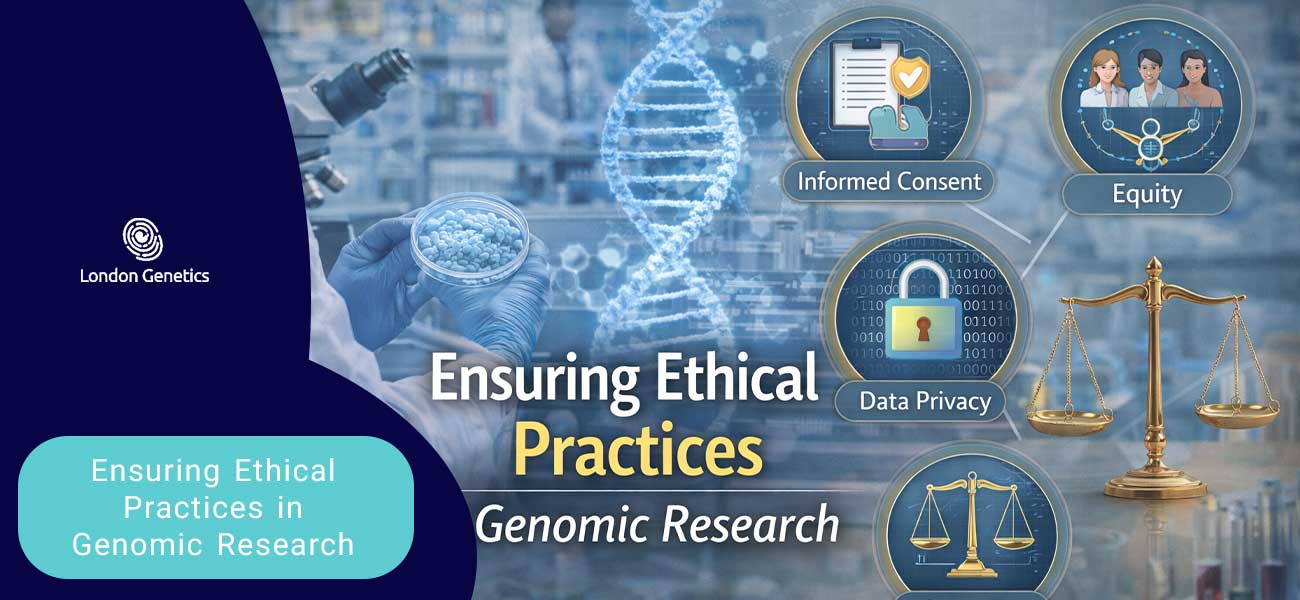
Ensuring Ethical Practices in Genomic Research
As we move beyond traditional testing and adopt more advanced genomic tools, the need for strict ethical oversight becomes paramount. A thorough rare disease diagnosis through Whole Genome Sequencing yields vast amounts of data regarding not just the patient, but also their family members, necessitating rigorous ethical standards in all genomics consulting.
Informed Consent and Data Privacy
Transparent communication is the cornerstone of ethical practice. Patients must understand exactly how their data will be used, stored, and shared when participating in genomic research. Furthermore, protecting patient confidentiality against potential misuse of genetic information is crucial. As we look at the full genome, ensuring that genomics consulting upholds patient autonomy and data security is essential to maintaining public trust in these technologies.
Managing Incidental Findings
The comprehensive nature of advanced genomic tools means that researchers may uncover “incidental findings”—genetic variants unrelated to the primary condition being investigated, which may nevertheless have significant health implications for the patient or their family. Ethical genomics consulting requires pre-test counselling to ensure patients are prepared for these possibilities and have made informed decisions about which findings they wish to receive. Balancing the benefits of a swift rare disease diagnosis with the potential psychological impact of unexpected genetic information is a central challenge in modern genomic research.
Conclusion: Moving Beyond Limits, Finding Answers
Receiving a negative result from standard testing does not mark the end of the diagnostic journey.
Advances in genomic medicine, including Whole Genome Sequencing and RNA-Seq,
now allow us to explore previously hidden aspects of your DNA,
uncovering answers that older technologies could not detect.
With expert genomics consultation, you can:
- Interpret complex genomic data with clinical precision
- Identify previously undetected genetic causes of rare or undiagnosed conditions
- Access actionable insights to guide personalised treatment and care
From Uncertainty to Insight:
– Leverage advanced genomic tools to uncover hidden diagnoses.
– Transform raw sequencing data into actionable clinical decisions.
– Empower yourself and your family with knowledge and clarity.
Why Specialist Genomics Consultation Matters:
Expert consultation bridges the gap between complex genomic results and meaningful clinical action.
By interpreting intricate sequencing data, specialists provide guidance that enables personalised care,
informed family planning, and a proactive approach to rare disease management.
Your Next Step:
If you or a family member are seeking answers for an undiagnosed condition,
consulting with our genomics specialists is the most effective way
to explore advanced diagnostic possibilities and gain clarity.