What Are SSRIs and How Do They Work?
Selective serotonin reuptake inhibitors, or SSRIs, are the most commonly prescribed type of antidepressant in the UK, used to treat depression, anxiety, and a range of other mental health conditions. Medicines such as sertraline, citalopram, and fluoxetine work by increasing the level of serotonin available in the brain — a neurotransmitter closely linked to mood, sleep, and general wellbeing.
By blocking the reabsorption (or “reuptake”) of serotonin into nerve cells, SSRIs allow more of it to remain active between neurons, gradually helping to lift mood and ease symptoms over several weeks. It’s this very mechanism, however, that also explains why SSRI side effects occur in the first place — serotonin doesn’t only affect the brain, but also plays a role in the gut, sleep cycles, and other bodily processes, which is why many people notice physical changes alongside any improvement in mood.
It’s worth understanding, too, that not everyone responds to SSRIs in the same way. Genetic differences can influence how quickly a person metabolises these medications, which partly explains why some people experience pronounced side effects while others tolerate the same drug with ease. This is an area explored in more depth through Psychiatric Pharmacogenetics, which looks at how a person’s genetic profile shapes their response to psychiatric medication.
Common SSRI Side Effects (Early Weeks of Treatment)
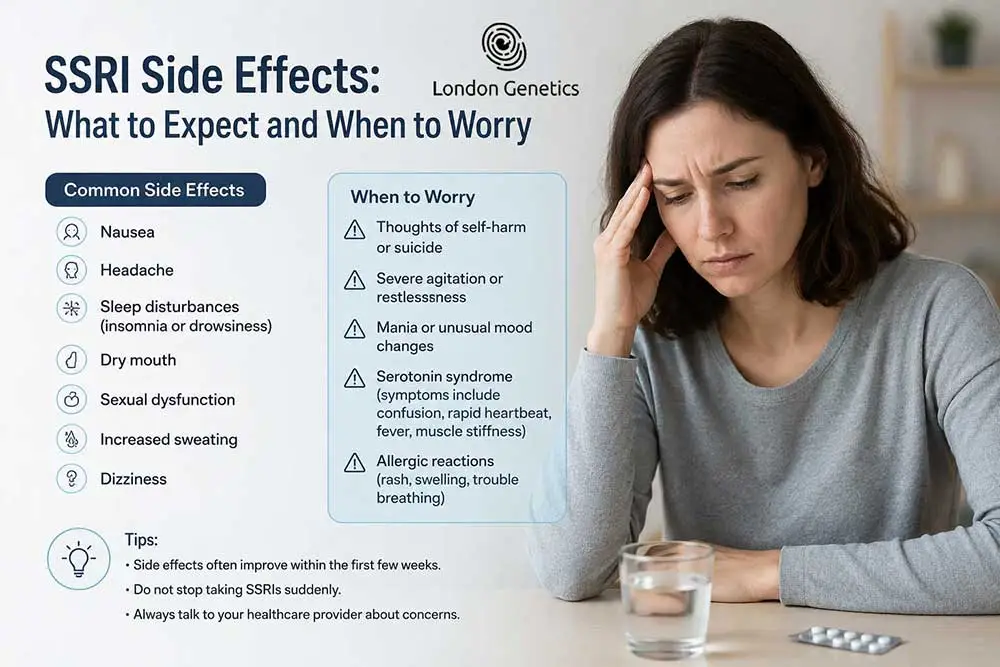
When you first start taking an SSRI, your body needs time to adjust to the change in serotonin levels, and this is usually when SSRI side effects are at their most noticeable. The good news is that most of these effects are mild and tend to settle down within the first one to two weeks as your body gets used to the medication.
Most SSRI side effects are your body’s temporary response to a change in serotonin activity, not a sign that the medication isn’t right for you. Staying in close contact with your prescriber during these early weeks means any concerning symptoms can be reviewed quickly, while the milder, expected effects are simply given the time they need to settle.
Less Common but More Persistent Side Effects
While many SSRI side effects ease within the first few weeks, some can linger for longer and are worth understanding in more detail, particularly if they start to affect your daily life.
Sexual Side Effects
One of the most commonly reported longer-term SSRI side effects is a change in sexual function, including reduced libido, delayed orgasm, or difficulty becoming aroused. Unlike nausea or headaches, this side effect doesn’t always fade with time and is one of the main reasons people consider switching medication. It’s worth being open with your GP about this, as it’s far more common than many people realise.
Weight Changes
Gradual weight gain, or occasionally weight loss, can occur with longer-term SSRI use. This tends to develop slowly over months rather than weeks, and lifestyle factors such as diet and activity levels can help manage it alongside your treatment.
Emotional Blunting
Some people describe feeling emotionally “flat” or less responsive to both positive and negative experiences while on an SSRI. This particular side effect can be subtle and easy to overlook, but it’s an important one to mention during a check-up if you notice it.
Fatigue or Low Energy
Persistent tiredness is another of the SSRI side effects that can continue well beyond the initial adjustment period. If fatigue is affecting your work or daily routine, it’s worth discussing whether a dose adjustment or a different SSRI might suit you better.
Sweating
Increased sweating, unrelated to temperature or exertion, is a lesser-known but fairly common longer-term effect. It’s rarely dangerous but can be uncomfortable and, understandably, a source of frustration for many patients.
Because these SSRI side effects tend to be more persistent than the early symptoms, it’s generally worth flagging them to your GP rather than simply putting up with them — there are often practical adjustments that can help.
Serious Side Effects: When to Seek Medical Help
While most SSRI side effects are mild and manageable, a small number of reactions are more serious and require prompt medical attention. Knowing what to look out for means you can act quickly if something isn’t right.
While these serious SSRI side effects are uncommon, being aware of them means you’re well placed to seek help quickly if needed. If you’re ever in doubt about a symptom, it’s always safer to contact your GP or NHS 111 rather than wait it out.
Why Do Side Effects Vary So Much Between People?
One of the most common questions patients ask is why two people can take the exact same SSRI, at the exact same dose, and have completely different experiences — one barely notices anything, while the other struggles with pronounced SSRI side effects from day one. The answer often lies in genetics.
Genetic Differences in Drug Metabolism
Much of how your body processes an SSRI comes down to a group of liver enzymes, particularly those in the CYP450 family, which break down and clear medication from your system. Some people have genetic variations that make these enzymes work faster or slower than average. If you metabolise a drug too slowly, it can build up in your system and increase the likelihood of side effects; if you metabolise it too quickly, the medication may clear before it has a chance to work properly.
Beyond Metabolism: Receptor Sensitivity
Genetics doesn’t only affect how a drug is broken down — it can also influence how sensitive your serotonin receptors are to begin with. This helps explain why some people feel the benefits of an SSRI quickly and comfortably, while others experience a rockier adjustment period with more noticeable side effects.
Other Contributing Factors
Age, body weight, other medications, and general health all play a role too. But for many patients who’ve tried more than one SSRI without success, or who’ve experienced unusually strong side effects, an underlying genetic factor is often part of the picture.
Understanding Your Own Genetic Profile
This is precisely the area explored through Psychiatric Pharmacogenetics, a specialised field that looks at how your unique genetic makeup influences your response to psychiatric medication. Rather than relying on trial and error, genetic testing can offer real insight into which medications — and which doses — are more likely to suit you, helping to reduce unwanted SSRI side effects before treatment even begins.

How to Manage and Reduce SSRI Side Effects
Experiencing SSRI side effects doesn’t necessarily mean you need to stop treatment altogether. There are several practical steps that can make a real difference, and most side effects can be managed without abandoning a medication that’s otherwise working well for you.
Take Your Medication with Food
Many gastrointestinal SSRI side effects, such as nausea, are noticeably reduced simply by taking your tablet alongside a meal rather than on an empty stomach.
Time Your Dose Carefully
If your SSRI is making you feel drowsy, taking it in the evening rather than the morning can help. Conversely, if it’s affecting your sleep or causing restlessness, your GP may suggest taking it earlier in the day instead.
Give It Time — But Not Too Much Time
Most early SSRI side effects settle within one to two weeks as your body adjusts. However, if side effects are severe, persistent, or getting worse rather than better after this point, it’s a sign to check in with your GP rather than simply waiting it out.
Stay Hydrated and Maintain a Balanced Diet
Simple lifestyle habits, such as drinking enough water and eating regular, balanced meals, can ease symptoms like headaches, fatigue, and digestive discomfort.
Never Adjust Your Dose Without Medical Advice
It can be tempting to reduce your dose or stop taking an SSRI abruptly when side effects feel unpleasant, but doing so can lead to withdrawal symptoms or a return of the underlying condition. Any changes to your dose should always be made under your GP’s guidance.
Discuss Alternatives with Your GP
If SSRI side effects continue to affect your quality of life despite these steps, your GP may suggest adjusting the dose, trying a different SSRI, or exploring another type of antidepressant altogether. Every person responds differently, and finding the right fit sometimes takes a little patience.
When to Talk to Your Doctor About Switching Medication
Sometimes, despite giving a medication a fair chance, it becomes clear that it simply isn’t the right fit. Knowing when persistent SSRI side effects warrant a conversation about switching, rather than just pushing through, can save weeks or months of unnecessary discomfort.
Ultimately, no one should have to tolerate ongoing SSRI side effects in silence. Open, honest conversations with your GP are the most reliable way to find a treatment that genuinely works for you, with side effects that are manageable rather than something you simply endure.
Book Your Consultation with Dr Karimiani